Simple Tips for Staying in a Washitsu in Okinawa
- Quick Answer
- First 30 Seconds in the Room
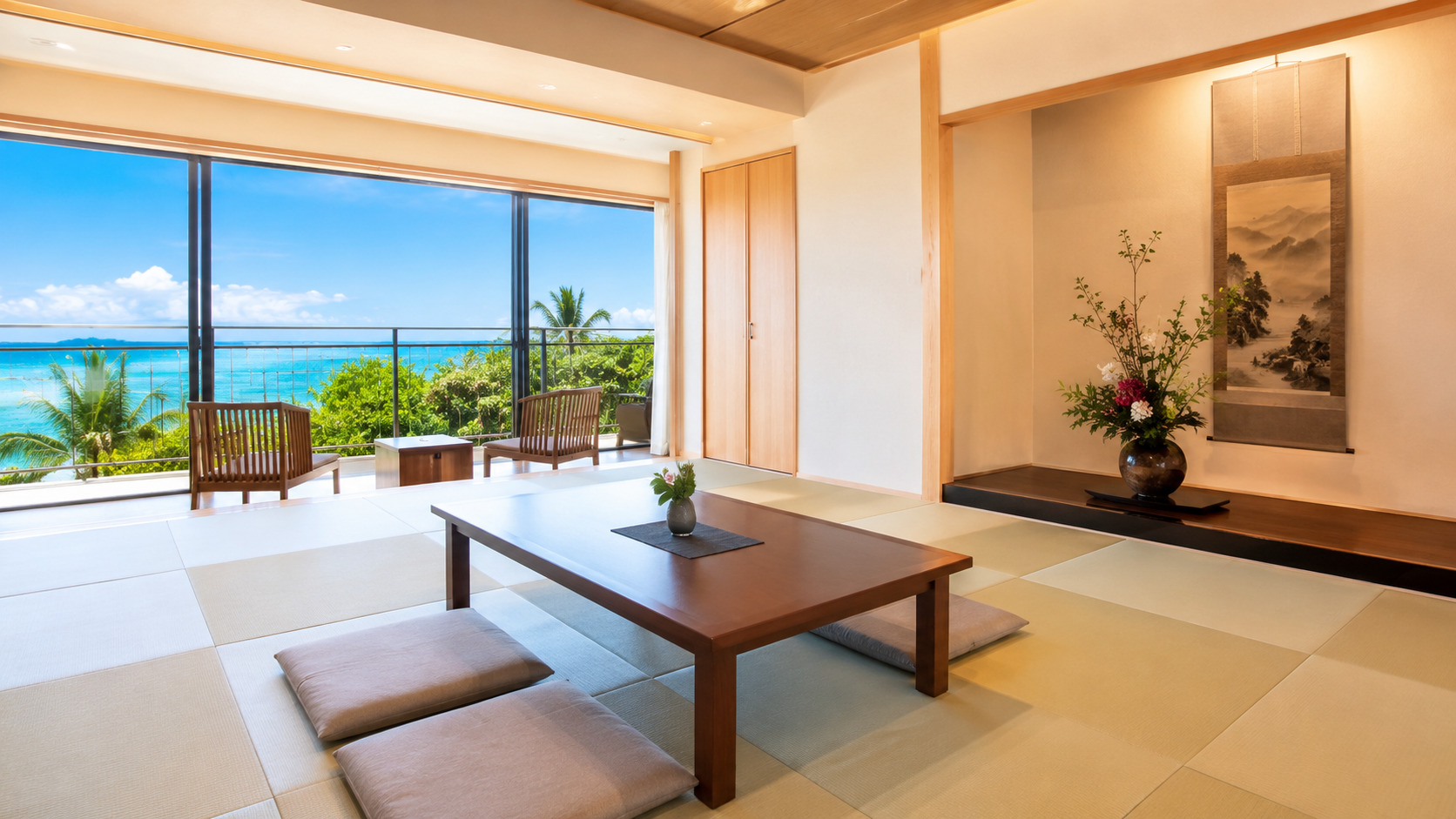
- What Is a Japanese-Style Room?
- Okinawa Tip: Ryukyu Tatami
- Shoes and Slippers
- How to Use Tatami
- How to Sit on Tatami
- Where to Put Your Suitcase
- Tokonoma Rules
- Okinawa Old Houses: Ichiban-Za
- Zabuton and Low Tables
- Futon Rules by Accommodation
- How to Set Up a Futon
- Pillow Tip
- How to Put Away the Futon
- Humidity Tips in Okinawa
- Shoji and Fusuma
- Night-Time Toilet Tips
- Insects and Small Animals
- Okinawa Tip: Small Geckos (Yaru)
- Relaxing in a Washitsu
- Useful English Phrases
- FAQ
- Summary
Quick Answer
- A Japanese-style room has tatami, futon, shoji, and a low table
- Avoid placing your suitcase directly on tatami
- If you need to move it, lift it instead of rolling it
- Futon rules change by accommodation type
- The tokonoma is a decorative space. Do not place luggage there
- Okinawa is humid, so leaving the futon out traps moisture
- Check the room rules in the first 30 seconds
First 30 Seconds in the Room
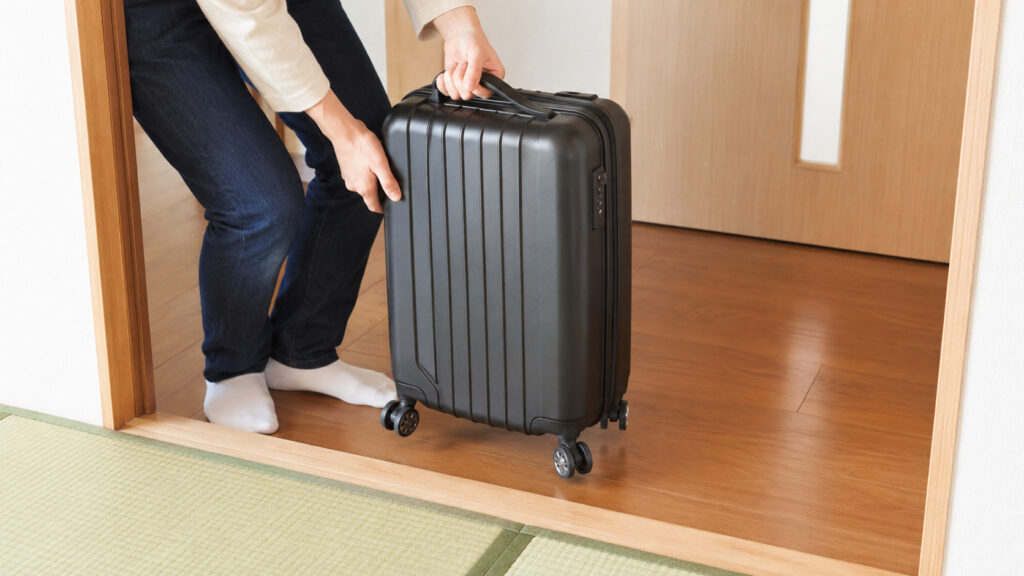
- Take off your shoes at the entrance
- Place your suitcase on wood flooring or a luggage rack
- Lift your suitcase when moving on tatami
- Turn on the air conditioner
- Okinawa is humid, so turning on the AC right away makes the room more comfortable
- Check the shoji and fusuma doors
- Check where the futon is stored
- Find the power outlets, especially near where you plan to sleep
What Is a Japanese-Style Room?
- It has tatami, sliding doors, and a low table
- Many travelers feel confused at first
- You can find washitsu in hotels, guesthouses, and old houses
Okinawa Tip: Ryukyu Tatami
- Some rooms use Ryukyu tatami, which has no border and looks modern
- It gives the room a clean, modern look that is popular in Okinawa
Do not worry. Once you learn the basics, the room becomes very comfortable
Shoes and Slippers
- Walk on tatami with bare feet or socks
- Do not use slippers on tatami
- Slippers are only for wooden floors
How to Use Tatami
- Tatami is soft and easy to damage
- Do not:
- Roll a suitcase
- Place wet items
- Bring sand onto the tatami (Okinawa sand sticks easily)
How to Sit on Tatami
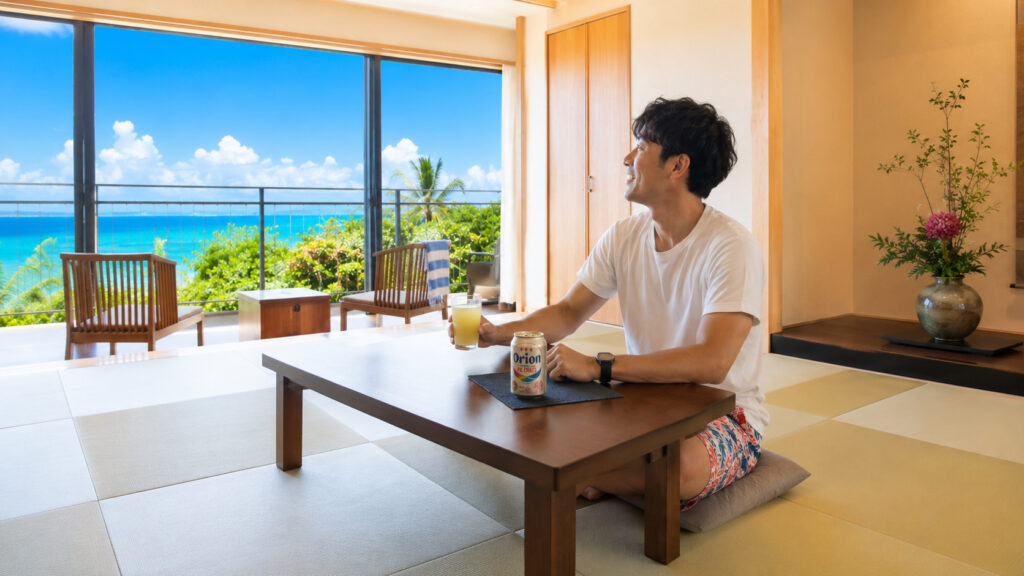
You can sit cross‑legged (common for men), sideways (common for women), or use a floor chair (zaisu)
Where to Put Your Suitcase
- Use the wooden floor near the entrance
- Or place it in a corner with hard flooring
- Avoid placing it on tatami if possible
Tokonoma Rules
- The tokonoma is a raised decorative space
- It is for art or flowers
- Do not place:
- Suitcases
- Bags
- Trash
- Bottles
- Clothes
- Treat it with care
Okinawa Old Houses: Ichiban-Za
- Only for traditional Okinawan houses
- Rooms are connected by sliding doors
- The back room is called Ichiban‑za, the guest room
- Keep your suitcase in a front room if possible
Zabuton and Low Tables
- A zabuton is for sitting. Avoid placing bags on it
- Do not lean on low tables. They can fall easily, especially for kids
Futon Rules by Accommodation
Ryokan
- Staff prepare your futon while you are out
- This is normal service in Japan
- Keep valuables in a safe
Guesthouses / Old Houses / Airbnb
- You prepare the futon yourself
- Futon is stored in the closet
- You may open and use the closet freely
How to Set Up a Futon
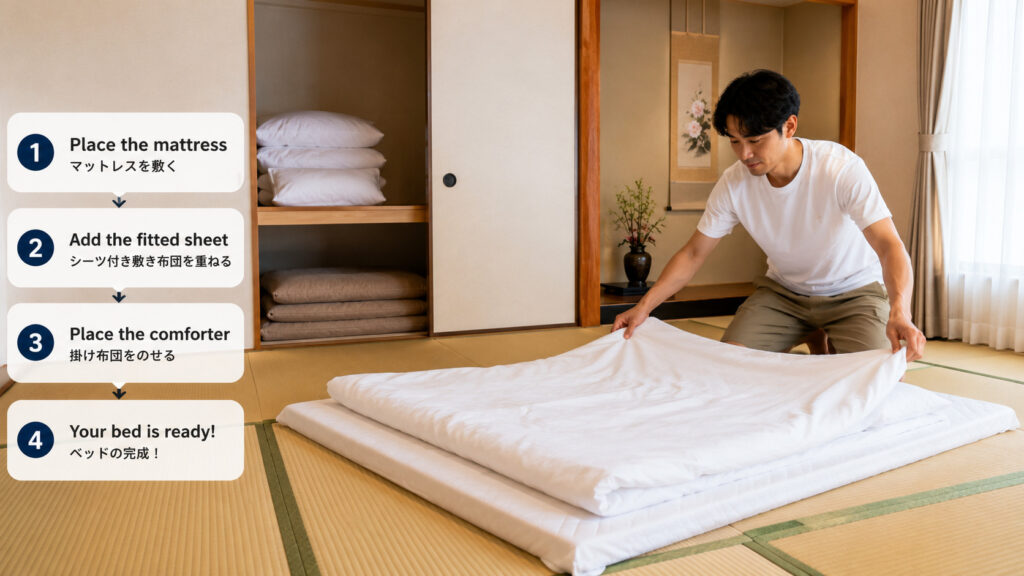
Order from bottom to top
- Mattress
- Shikibuton (with sheet)
- You
- Kakebuton (with cover)
Think: hard → soft → you → fluffy If reversed, your back may hurt
Pillow Tip
- Japanese pillows have a firm side (buckwheat or pipe) and a soft side
- The firm side is designed to support your head
- If you place the firm side underneath, the pillow may slide on tatami
How to Put Away the Futon
- Fold it every morning
- Store it in the closet or fold it in the corner
- Okinawa is humid, so leaving it out traps moisture
- Folding also changes the room from a bedroom to a daytime living space
Humidity Tips in Okinawa
- Humidity is very high
- Use Dry Mode on the AC
- For ventilation, open windows only for a short time
- Keep windows closed at night to avoid insects
Shoji and Fusuma
- Shoji = paper doors (easy to tear)
- Fusuma = thick sliding doors
- Slide gently and hold the frame
- They do not block sound completely
Night-Time Toilet Tips
- Check the light switch before sleeping
- Watch your step. Shoji makes the room dark
- Many washitsu have small steps
- A small light is helpful
Insects and Small Animals
- Keep windows closed at night
- Do not leave food out
Okinawa Tip: Small Geckos (Yaru)
You may hear a high‑pitched “chi‑chi‑chi” sound or see a small gecko on the wall at night They are completely harmless and do not bite Many Okinawan people consider them a symbol of good luck
Relaxing in a Washitsu
- After the beach, rest in a cool washitsu
- Lie on the tatami with a cold glass of shikuwasa juice
- Many adults also enjoy a local Orion beer after the beach
- It is one of those simple moments that makes a trip to Okinawa memorable
Useful English Phrases
- “Can you prepare the futon?”
- “Where should I put my luggage?”
- “How do I use the sliding doors?”
- “Can you show me how to set up the futon?”
FAQ
Is a washitsu good for families? Yes. Tatami is soft and safe for kids. You can sleep together on futon
Do I set up the futon myself? Ryokan staff do it. Guesthouses and Airbnb require self‑setup
Can I ask for extra futon? Yes, but numbers are limited. Ask early
Is tatami comfortable for sleeping? Yes, if you stack the mattress and futon correctly
Can I open the closet? Yes. You can use it for futon or luggage
Can I sleep directly on the tatami? No. Use the mattress and futon provided by the accommodation
Can I move the low table? Yes. Just move it carefully and return it to its original place before you leave
Summary
- A washitsu is a special part of Japanese culture
- The 30‑second rule helps you stay without stress
- Learn the key points about tatami, futon, and the tokonoma
- Humidity care is important in Okinawa
- With a little knowledge, a washitsu becomes a wonderful place to stay
- It can become one of your favorite memories of your trip
- You may feel unsure at first, but after one night, you will enjoy its comfort
Related Guides
👉 Okinawa Travel Guide for First-Time Visitors
👉 Do You Need a Car in Okinawa? (A Local’s Honest Advice)
👉 How Much Time Do You Need in Okinawa?
👉 Why Your Last Day in Okinawa Feels Better With Extra Airport Time


コメント