A Simple Safety Guide for Travelers in Okinawa
Okinawa is a beautiful island. But a tsunami warning can be confusing for travelers. This guide gives simple steps so you can stay safe and calm.
- Quick Answer
- Warning vs Advisory
- Why Tsunami Warnings Matter in Okinawa
- What to Do When the Warning Starts
- Which Direction Should You Go?
- Coastal Areas to Be Careful In
- How to Read Tsunami Signs (Blue Signs)
- How to Recognize Evacuation Buildings (Green Mark)
- When Vertical Evacuation Is Useful
- When You Reach an Evacuation Building
- For Families with Children
- If You Are in a Hotel
- If You Are Using a Rental Car
- If There Is a Blackout
- When Can You Return?
- Reassurance for Travelers
- Useful Information Sources
- What to Prepare Before Your Trip
- Quiet Okinawa Recommendation
- Summary
Quick Answer
Move away from the sea. Evacuate on foot. Go to higher ground or a tsunami evacuation building. If you are not sure, follow hotel staff or local instructions.
Warning vs Advisory
Tsunami Warning
- A high tsunami may come
- Evacuate immediately
Tsunami Advisory
- Stay away from the coast
- Do not go to the beach
Both mean: Do not return to the sea.
Why Tsunami Warnings Matter in Okinawa
Conclusion: Tsunamis can reach Okinawa even from faraway earthquakes. Reason: Okinawa has many low coastal areas. Details:
- A tsunami can come even if shaking is small
- Later waves can be bigger
- A warning means “danger is near”
Real Example
In 2024, a large earthquake near Taiwan caused a tsunami warning in Okinawa. Travelers evacuated safely with help from hotels and police.
What to Do When the Warning Starts
Note: Your phone and nearby phones will make a very loud alert sound. This is normal in Japan. Stay calm and follow the steps.
1. Move away from the sea
Leave the beach, coastal roads, bridges, and Kaichu Road.
2. If you are swimming or playing in the sea
- Get out of the water immediately
- Leave your belongings behind
- Your life is more important
- Do not go back for your passport or wallet
- Move away from the sea
- Go uphill whenever possible
3. Do not return to take photos or fly a drone
Tsunamis come in multiple waves. Going back is extremely dangerous.
4. Evacuate on foot (very important)
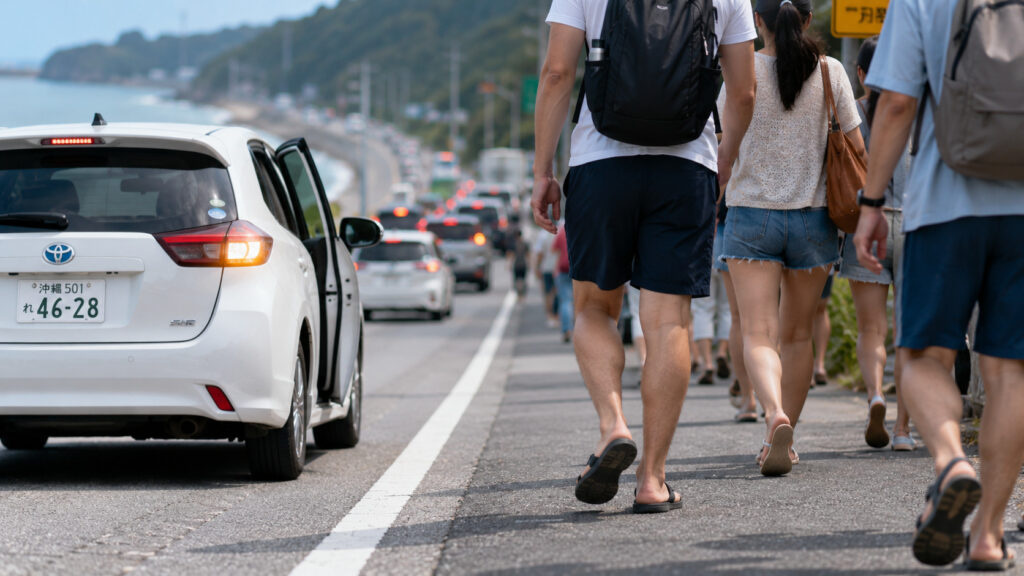
Conclusion: Always evacuate on foot. Reason: Roads near the coast fill with cars very fast. Details: Cars cannot move during a tsunami evacuation.
Which Direction Should You Go?
- Move away from the sea
- Go uphill whenever possible
- Sandals are OK. Do not waste time changing shoes.
Coastal Areas to Be Careful In
These popular spots have low elevation:
- Kouri Island and Kouri Bridge
- Senaga Island
- Kaichu Road
- Onna Village beach areas
- Southern coast (near Nirai Kanai Bridge)
These areas require horizontal evacuation (move inland).
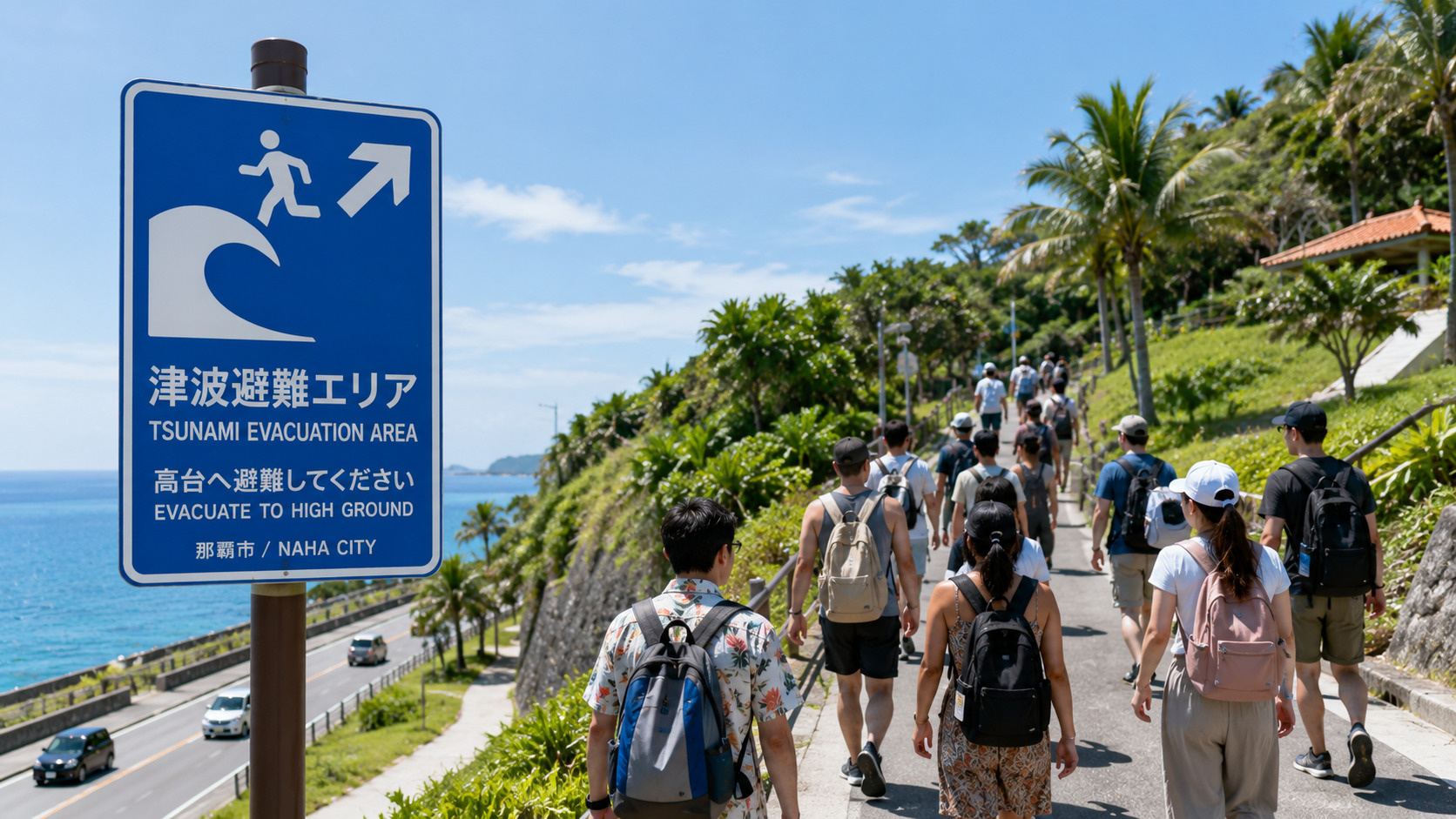
How to Read Tsunami Signs (Blue Signs)
You will see blue signs for:
- Tsunami Evacuation Area
- Tsunami Evacuation Building
Follow the arrow to move in the safe direction.
How to Recognize Evacuation Buildings (Green Mark)
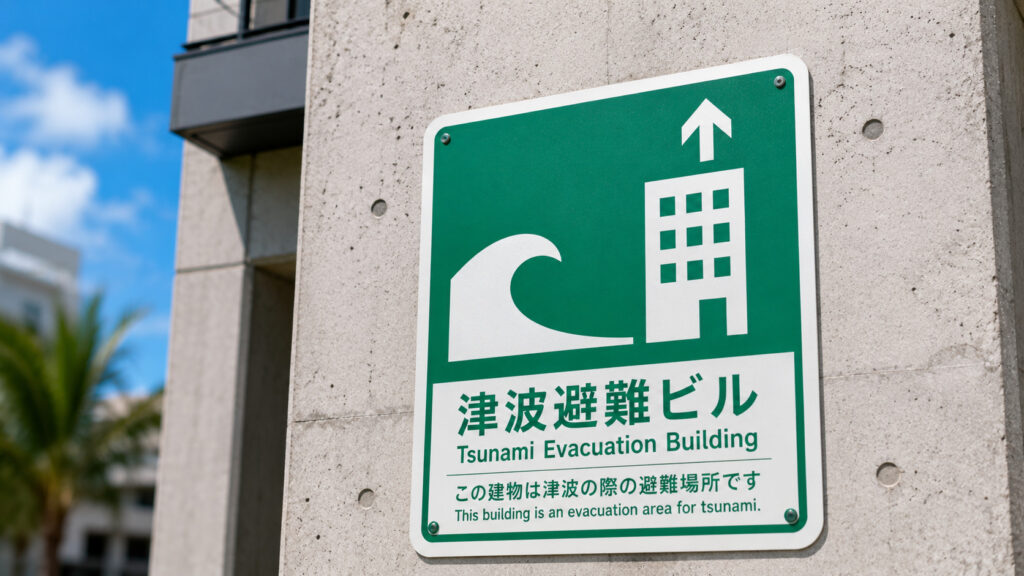
Look for the green sign with a wave and a building. This is an official tsunami evacuation building. Go inside and move to an upper floor.
When Vertical Evacuation Is Useful
Go up if you cannot reach high ground:
- No hill nearby
- Nighttime or heavy rain
- With children or elderly people
- Near a strong concrete hotel or building
Priority: Official tsunami evacuation building → Strong concrete building → Hotel upper floor
When You Reach an Evacuation Building
- Go to an upper floor
- Wait for instructions
- Do not go down by yourself
- Stay until the warning is lifted
For Families with Children
- Leave strollers behind
- Carry your child and evacuate
- If separated, meet at your planned evacuation spot
If You Are in a Hotel
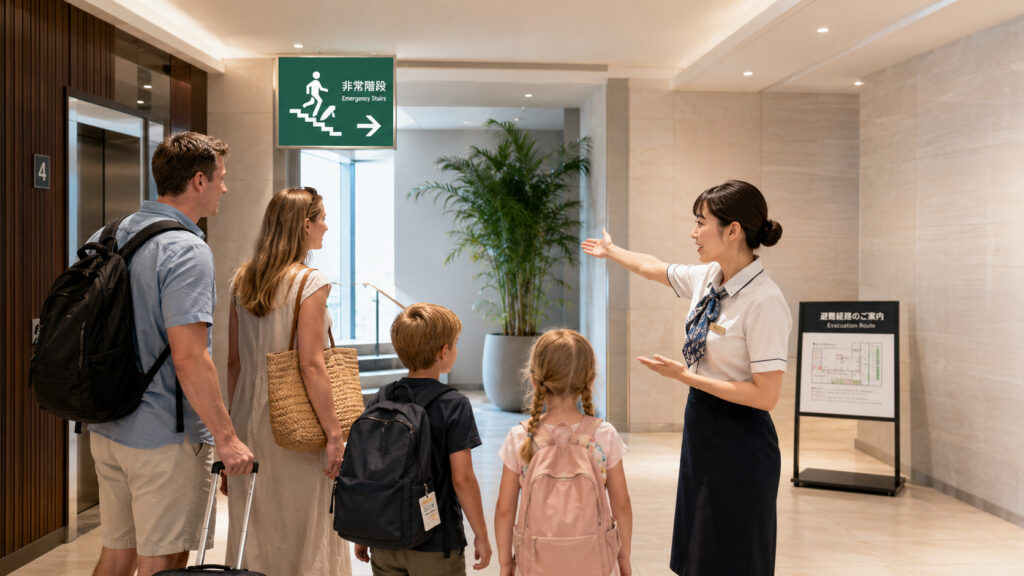
- Follow staff instructions
- Do not use elevators
- Check the emergency exit
- Remember your room number
- Staff guidance is the safest option
If You Are Using a Rental Car
- Stop in a safe place
- Leave the car (leave the key inside)
- Follow evacuation signs
- Do not make U-turns
- Evacuate on foot
See also: Okinawa rental car safety guide
If There Is a Blackout
- Google Maps Offline is helpful
- Emergency alerts may still work, but do not rely on your phone alone
- Follow hotel announcements whenever possible
- Be careful at night
When Can You Return?
- A warning may last for several hours
- Do not return to the coast until the warning is lifted
- Wait for hotel or local announcements
Reassurance for Travelers
Many beaches and tourist areas in Okinawa have clear tsunami evacuation signs. Local staff are used to helping travelers during emergencies. There will be people ready to help you.
Useful Information Sources
- Safety tips app (multi-language alerts)
- NHK WORLD-JAPAN (English disaster news)
- Okinawa Prefecture disaster information
- Hotel front desk
What to Prepare Before Your Trip
- Save nearby evacuation spots in Google Maps
- Install the Safety tips app
- Check the direction of higher ground near your hotel
Quiet Okinawa Recommendation
A tsunami warning is not something to fear. It is an early signal to move to safety.
Remember one simple rule: Move away from the sea, go up, and let local staff guide you.
Summary
- Move away from the sea
- Evacuate on foot
- Go to higher ground or a tsunami evacuation building
- Leave your belongings behind
- Do not return for photos
- Wait until the warning is lifted
- Check evacuation spots in advance
Related Guides
👉 Okinawa Travel Guide for First-Time Visitors
👉 Do You Need a Car in Okinawa? (A Local’s Honest Advice)
👉 How Much Time Do You Need in Okinawa?
👉 Why Your Last Day in Okinawa Feels Better With Extra Airport Time


コメント