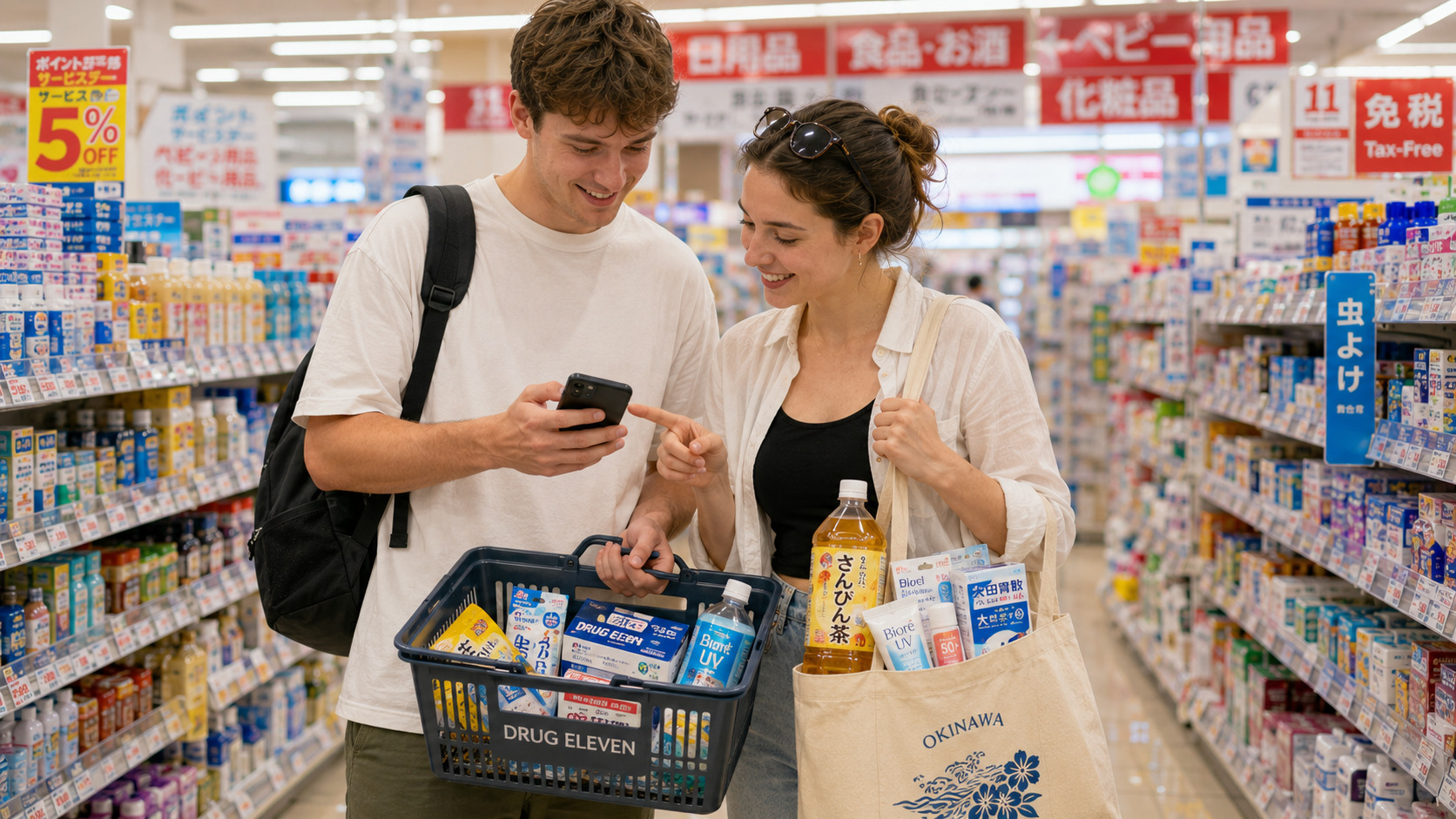
Many first-time visitors to Japan are surprised not by the tourist attractions, but by everyday life.
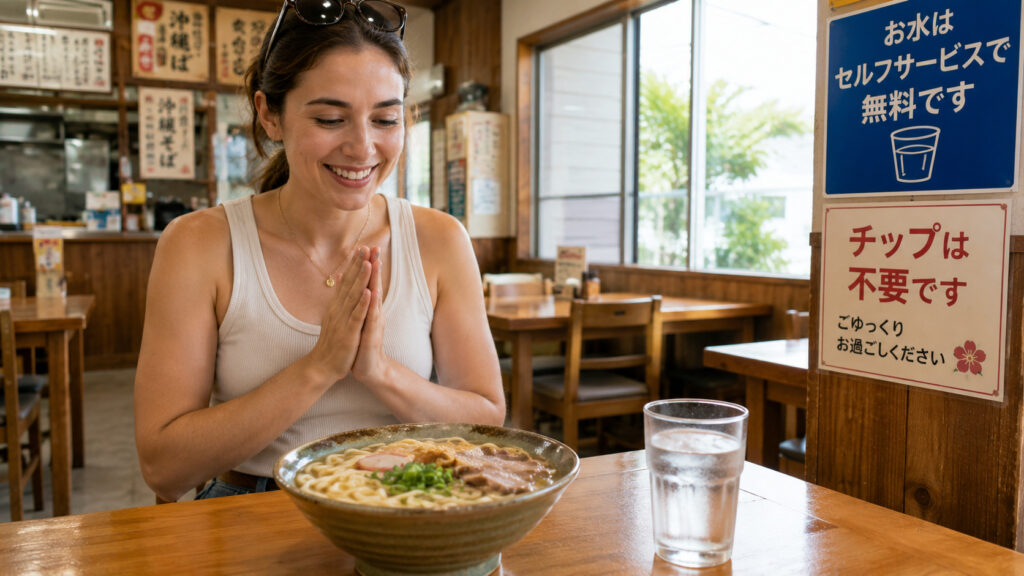
Restaurants usually serve free water or tea. You do not need to tip. There are very few trash bins on the streets.
These are simple customs. If you know them before your trip, you can:
• Order food without stress • Pay smoothly • Avoid small problems • Enjoy your trip with confidence
This guide explains 20 common things in Japan that many travelers do not expect. It is especially helpful if Okinawa is your first stop in Japan.
- Quick Overview
- Restaurants & Food
- 1. Free water or tea
- 2. No tipping
- 3. Pay at the register
- 4. Order first at ticket machines
- 5. Staff usually give you space until you ask for help
- Good to Know – Restaurants
- Street & Shopping
- 6. Quiet public spaces
- 7. Choose a place to make phone calls
- 8. Few trash bins outside
- 9. Plastic bags are not free
- 10. Convenience stores can heat your food
- 11. Many vending machines
- 12. Some places still accept cash only
- Good to Know – Street & Shopping
- Hotels & Daily Life
- 13. Take off your shoes indoors
- 14. Different slippers for rooms and toilets
- 15. Be careful in tatami rooms
- 16. No photos in some areas
- 17. Line up naturally
- Good to Know – Hotels & Daily Life
- When You Need Help
- 18. Free public toilets
- 19. Buy medicine at drugstores
- 20. “Sumimasen” helps in many situations
- Good to Know – When You Need Help
- More Helpful Guides
- Travel Checklist Before Your Trip
- Conclusion
Quick Overview
Restaurants & Food
- Free water or tea
- No tipping
- Pay at the register
- Order first at ticket machines
- Staff usually give you space until you ask for help
Street & Shopping
- Quiet public spaces
- Choose a place to make phone calls
- Few trash bins outside
- Plastic bags are not free
- Convenience stores can heat your food
- Many vending machines
- Some places still accept cash only
Hotels & Daily Life
- Take off your shoes indoors
- Different slippers for rooms and toilets
- Be careful in tatami rooms
- No photos in some areas
- Line up naturally
When You Need Help
- Free public toilets
- Buy medicine at drugstores
- “Sumimasen” helps in many situations
Restaurants & Food
1. Free water or tea
Restaurants usually serve free water or tea. In many countries, water costs money, so this can be surprising. Some places are self-service. This is the same in Okinawa.
2. No tipping
You do not need to tip in restaurants, hotels, or taxis. Service fees may already be included. If you try to tip, staff may feel confused.
3. Pay at the register
In many restaurants, you take the bill to the register to pay. In Okinawa’s local diners, you may pay near the kitchen counter.
4. Order first at ticket machines
Ramen shops, Okinawa soba shops, and small diners often use ticket machines. You buy your meal ticket before sitting down. Many machines have photos, so it is easy to choose.
5. Staff usually give you space until you ask for help
Japanese staff usually do not approach customers unless they need help. This is to let you shop or eat comfortably. If you need help, say “Sumimasen” (Excuse me).
Good to Know – Restaurants
One more helpful tip: If you are unsure, look at what other customers do or say “Sumimasen.” Most people will be happy to help.
Street & Shopping
6. Quiet public spaces
People stay quiet on trains, buses, hotel hallways, and in hospitals. Speaking softly is appreciated.
7. Choose a place to make phone calls
Long phone calls inside trains or quiet shops are not common. Short calls or stepping outside is fine.
8. Few trash bins outside
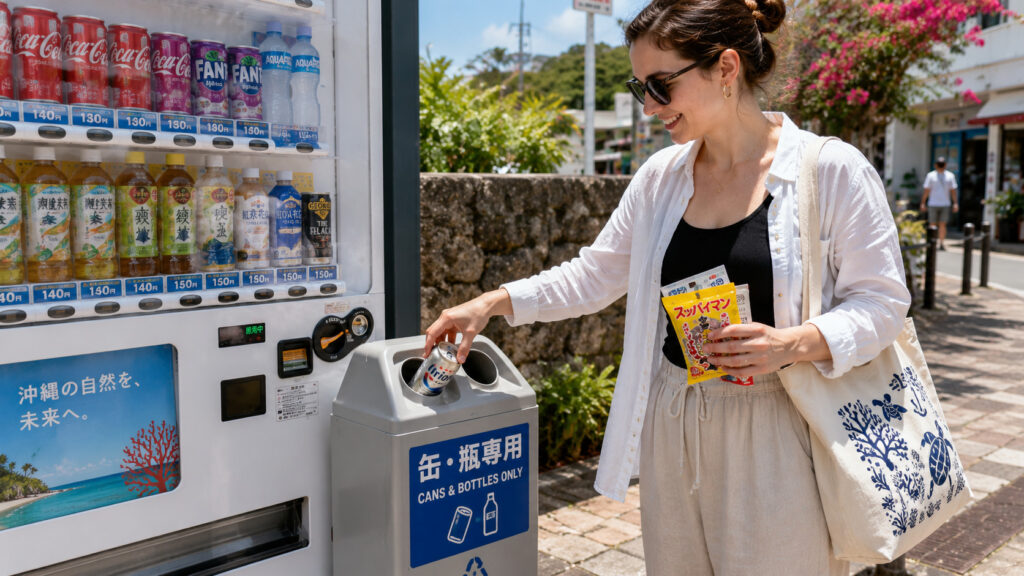
Japan has a “take your trash home” culture. Vending machine bins are only for bottles and cans. Please do not put other trash there.
Some convenience stores allow you to use their trash bins, but rules differ. If you are not sure, take the trash back to your hotel.
If you plan to eat while walking, carry a small trash bag.
9. Plastic bags are not free
Stores charge 3–5 yen for plastic bags. A small eco-bag is useful.
10. Convenience stores can heat your food
Staff may ask: “Atatame-masu ka?” (pronounced: ah-tah-tah-meh-mahs-kah) You can answer: • “Hai” (Yes) • “Daijoubu desu” (No, thank you)
11. Many vending machines
Japan has vending machines everywhere. In Okinawa, you can find sanpin tea and shikuwasa drinks easily.
12. Some places still accept cash only
Cash is needed at: • Local diners • Beach showers • Coin parking • Small shops • Tempura stands
Even if you mainly use cards, carrying 5,000–10,000 yen is helpful.
Good to Know – Street & Shopping
Because trash bins are rare, carrying a small trash bag makes your day easier.
Hotels & Daily Life
13. Take off your shoes indoors
This is common in ryokan, guesthouses, and Japanese homes. Look for a step or sign near the entrance.
14. Different slippers for rooms and toilets
Room slippers and toilet slippers are separate. Do not bring toilet slippers back into the room.
15. Be careful in tatami rooms
Do not wear shoes on tatami. Lift your suitcase instead of dragging it.
16. No photos in some areas
Some shrines, temples, shops, and areas with other customers do not allow photos. If unsure, ask or avoid taking pictures.
17. Line up naturally
People line up at bus stops, registers, and popular shops. Avoid cutting in line.
Good to Know – Hotels & Daily Life
If you are unsure about shoes or slippers, check signs or follow what others do.
When You Need Help
18. Free public toilets
You can use toilets for free in convenience stores, malls, parks, and roadside stations. Most public toilets are clean and well maintained.
19. Buy medicine at drugstores
You can buy cold medicine, stomach medicine, and painkillers at drugstores. If you cannot explain your symptoms, show them using a translation app.
20. “Sumimasen” helps in many situations
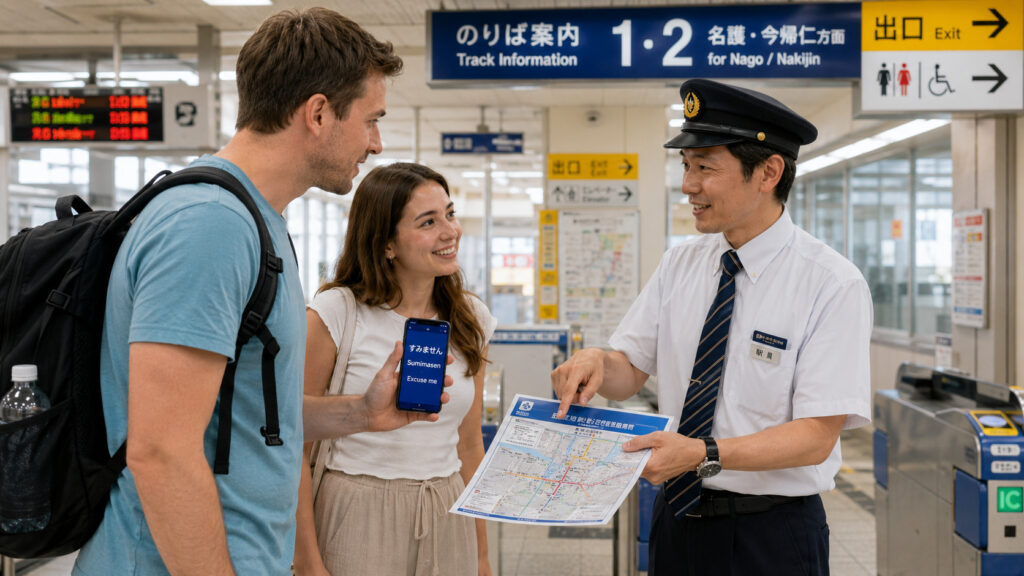
“Sumimasen” (Excuse me) is the most useful word in Japan. Use it when: • Getting a staff member’s attention • Asking for directions • Saying a light apology
“Arigatou” (Thank you) is also helpful.
Good to Know – When You Need Help
If you say “Sumimasen,” most people will be happy to help. Do not worry if your English is simple. Many people understand simple English words.
More Helpful Guides
• Renting a Car in Okinawa • Japan Convenience Store Tips • How to Choose a Hotel in Okinawa
Travel Checklist Before Your Trip
☐ I know tipping is not needed ☐ I know that water is usually free in restaurants ☐ I will carry 5,000–10,000 yen in cash ☐ I will bring a small eco-bag ☐ I will carry a small trash bag ☐ I can say “Sumimasen” and “Arigatou” ☐ I know when to remove my shoes
Conclusion
Japan has many simple customs. At first, they may seem unusual. But most of them come from one idea: Everyone should feel comfortable.
You do not need to remember everything. If you watch what others do or say “Sumimasen,” people will usually be happy to help.
Knowing these simple customs before you travel will help you enjoy Japan—and Okinawa—with more confidence and less stress.
Related Guides
👉 Okinawa Travel Guide for First-Time Visitors
👉 Do You Need a Car in Okinawa? (A Local’s Honest Advice)
👉 How Much Time Do You Need in Okinawa?
👉 Why Your Last Day in Okinawa Feels Better With Extra Airport Time
コメント