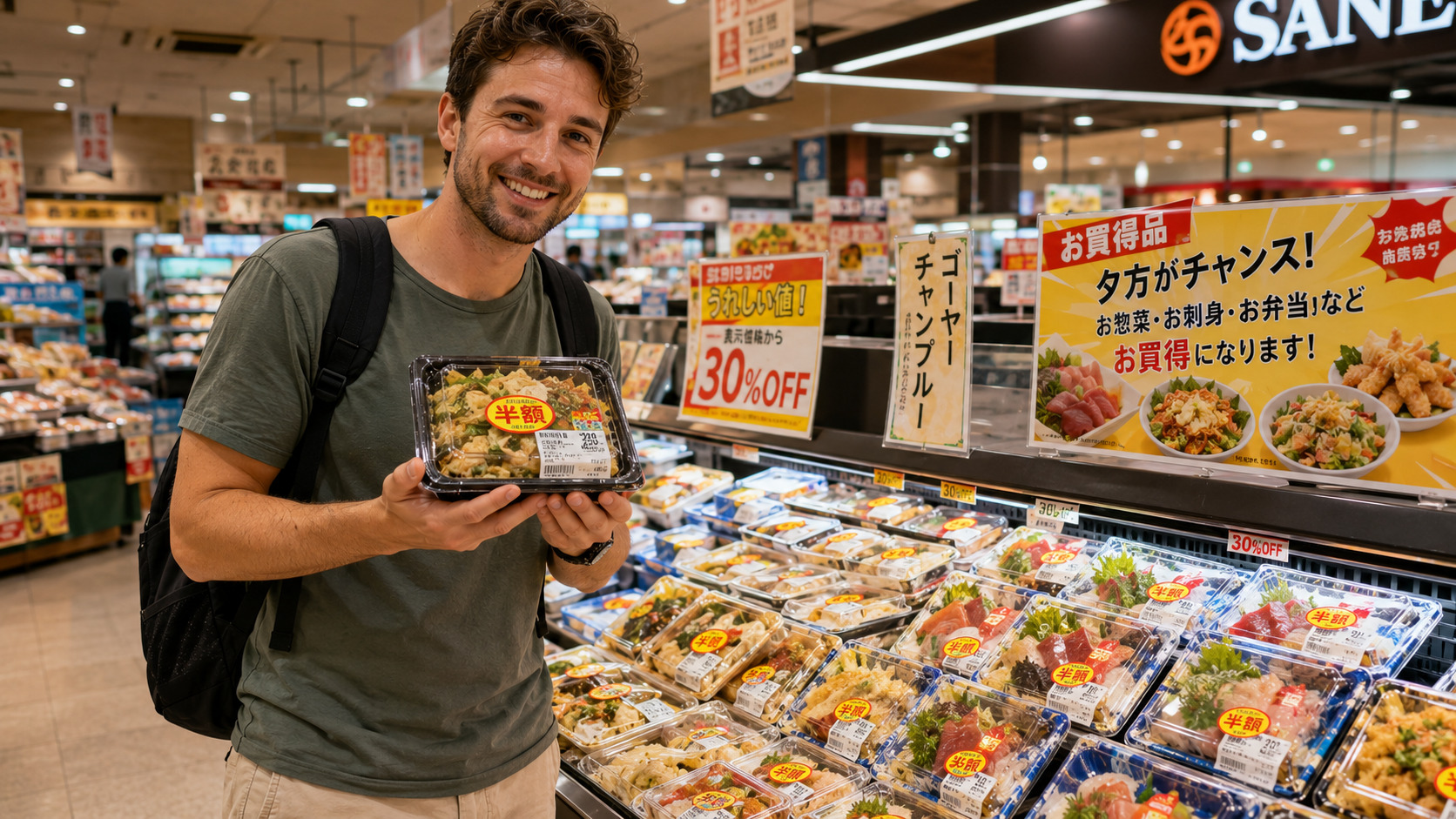
Discount stickers help you save money on meals during your trip. They are very useful for long‑stay travelers and budget travelers.
Quiet Tip: Think of discount stickers as a small bonus. If you find one, enjoy it.
- Why Do Supermarkets Use Discount Stickers?
- Types of Discount Stickers
- When Do Discount Stickers Appear?
- How Staff Add Discount Stickers
- Do Not Move or Change Stickers
- What Items Get Cheaper?
- How to Use Discount Stickers
- “Best‑before” and “Use‑by” Dates
- Why This Helps Travelers
- Discount Culture in Okinawa
- Summary
Why Do Supermarkets Use Discount Stickers?
Japanese supermarkets use discount stickers to reduce food waste. They discount items when the date is getting close.
Types of Discount Stickers
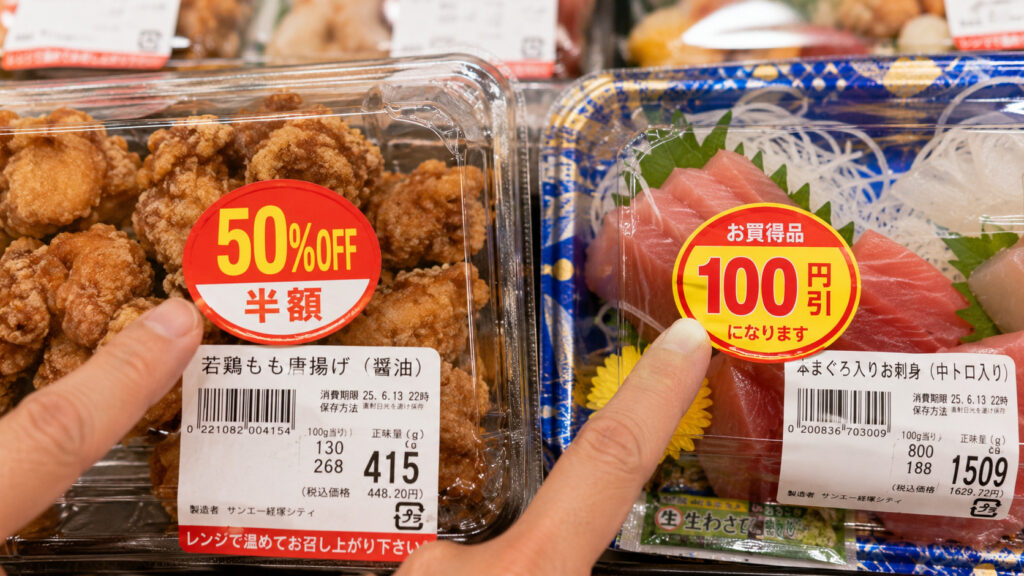
Percentage Discounts
- 20% OFF, 30% OFF, 50% OFF, Half Price Easy to understand.
Yen Discounts
- 50 yen OFF, 100 yen OFF The kanji 「引」 means “minus”. Example: 100円引 → 100 yen cheaper (not “100 yen total”).
Quiet Tip: Many travelers look only for “%”. But “円引” is also a discount.
When Do Discount Stickers Appear?
- Afternoon: small discounts on bread
- 16:00–18:00: 30% OFF on bentos and side dishes
- 18:00–20:00: more half‑price items
- Before closing: more discounted items may appear
Quiet Tip: In Okinawa, many stores close early. 18:00–20:00 is the best time.
How Staff Add Discount Stickers
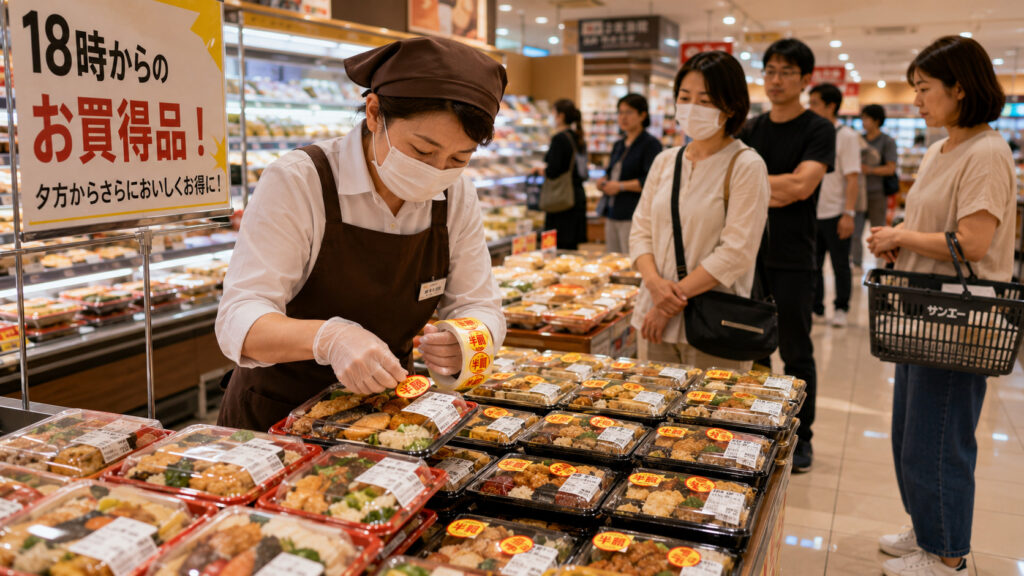
In the evening, staff start adding stickers. People stand nearby and quietly wait while staff add stickers.
- Do not ask staff to put a sticker on your item
- Stickers are added only to items on the shelf
- Wait until staff finish, then take the item
Quiet Tip: Some people wait for a bigger discount. But another customer may buy it first. If you really want it, take it early.
Do Not Move or Change Stickers
Quiet Tip: Only staff can put discount stickers. Do not move stickers to another item. In Japan, you cannot ask for extra discounts at the register. These actions are against store rules.
What Items Get Cheaper?
- Bentos
- Side dishes (fried chicken, tempura, salads)
- Bread
- Sashimi
- Meat and fish
- Desserts
Quiet Tip: Half‑price sashimi and bentos are very popular. They may sell out in minutes.
How to Use Discount Stickers
- Take the item to the register
- Self‑checkout will apply the discount automatically
- Do not remove the sticker
- You do not need a coupon, app, or special membership
“Best‑before” and “Use‑by” Dates
Best‑before (賞味期限)
- You will see the kanji 「賞味期限」
- It means the food is at its best quality before this date
- Not dangerous if slightly past
- Usually printed at the top of the label
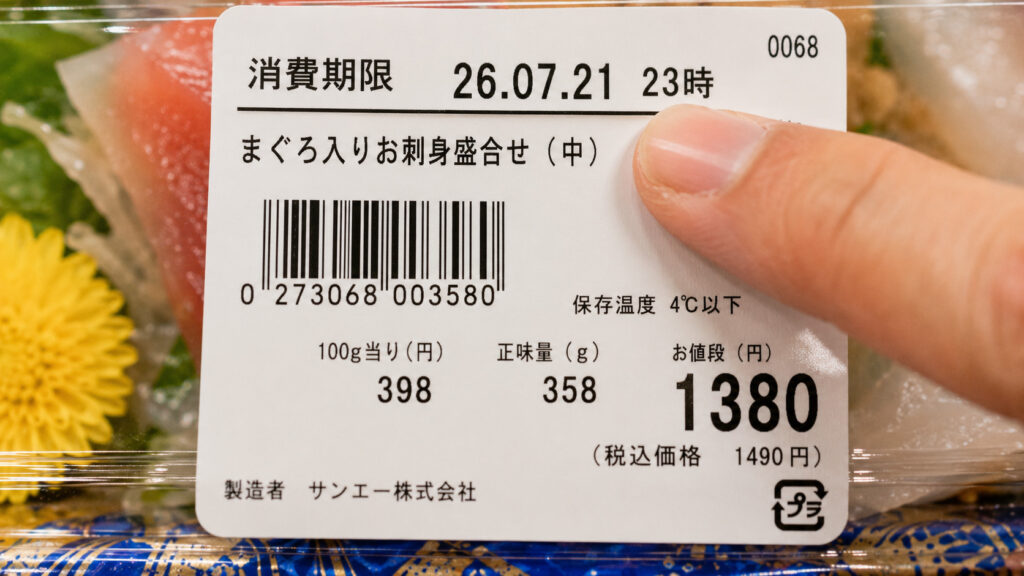
Use‑by (消費期限)
- You will see the kanji 「消費期限」
- Bentos, sashimi, and side dishes use this
- Eat it by the printed date or time
- Usually printed at the top of the label
Note: Japanese dates are written as Year / Month / Day. “時” means “o’clock”. So “23時” = 23:00 (11 PM). Eat it before that hour.
Quiet Tip: Eat sashimi and other fresh foods on the same day.
Why This Helps Travelers
- You can eat cheaply in your hotel
- You can enjoy vegetables and fish easily
- You can save money during long stays
- You can experience local food culture
Discount Culture in Okinawa
- Island‑vegetable dishes, like simmered local greens, often get discounted
- Goya Champuru bentos may be discounted
- Local supermarkets (Kanehide, San‑A) have many discounts
- Residential areas have more discounts than tourist areas
Summary
- Evening is the best time for discounts
- Check both % OFF and yen OFF
- Follow local manners
- Always check the Use‑by date
Quiet Tip: You do not need to hunt for discounts. If you find one, enjoy it as a small local bonus.
Related Guides
👉 Okinawa Travel Guide for First-Time Visitors
👉 Do You Need a Car in Okinawa? (A Local’s Honest Advice)
👉 How Much Time Do You Need in Okinawa?
👉 Why Your Last Day in Okinawa Feels Better With Extra Airport Time

コメント