Simple Rules and Manners for Travelers
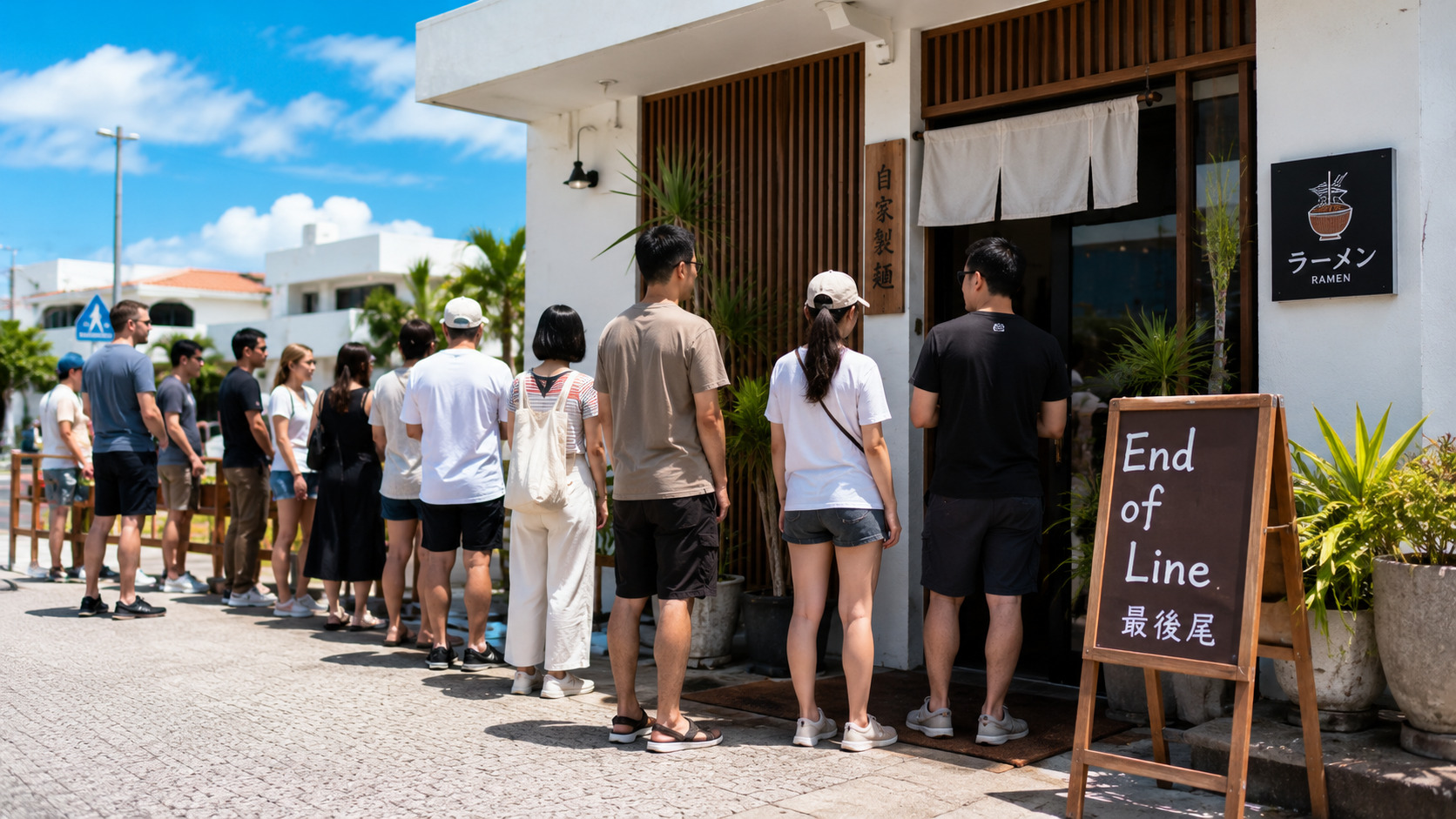
When you travel in Japan, you will often see people waiting in neat lines at restaurants, stations, and even convenience stores.
The short answer is simple:
Japan has clear line rules, and following them makes your trip easier.
Japan sees lining up as a way to keep fairness, order, and trust. If you know the basic rules, you can avoid stress during your trip.
- Why Japan Has Many Lines
- Common Line Behaviors in Japan
- Floor Markers: Look at Your Feet
- Why Line Cutting Is Not Accepted
- Leaving the Line Can Lose Your Spot
- Do Not Step Over the Line
- Can You Sit on a Bench While Waiting?
- Places Where Lines Are Common
- When There Is No Line but There Is an Order
- How to Write Your Name on a Waiting List
- How to Line Up at Convenience Stores
- When There Are Two Lines
- Escalator Rules
- Number Tickets at Popular Shops
- How to Find the End of the Line
- Tips for Long Lines
- Common Mistakes Travelers Make
- Useful Japanese Phrases
- Why Knowing Line Rules Helps Your Trip
- Quiet Tip (OkiLocal)
- FAQ
Why Japan Has Many Lines
- Fairness: People are served in the order they arrive
- Safety and order: No pushing or confusion
- Service quality: Shops control the number of customers to provide better service
- Respect: People care about others’ time and space
Common Line Behaviors in Japan
- Lines are straight and quiet
- People wait calmly
- No cutting in line
- People follow staff instructions
- Floor markers show where to stand
Floor Markers: Look at Your Feet

You will see floor signs in convenience stores, drugstores, and train stations. Even if no one is at the counter, stand at the end of the floor line.
Think of floor markers as a “silent guide” in Japan.
Why Line Cutting Is Not Accepted
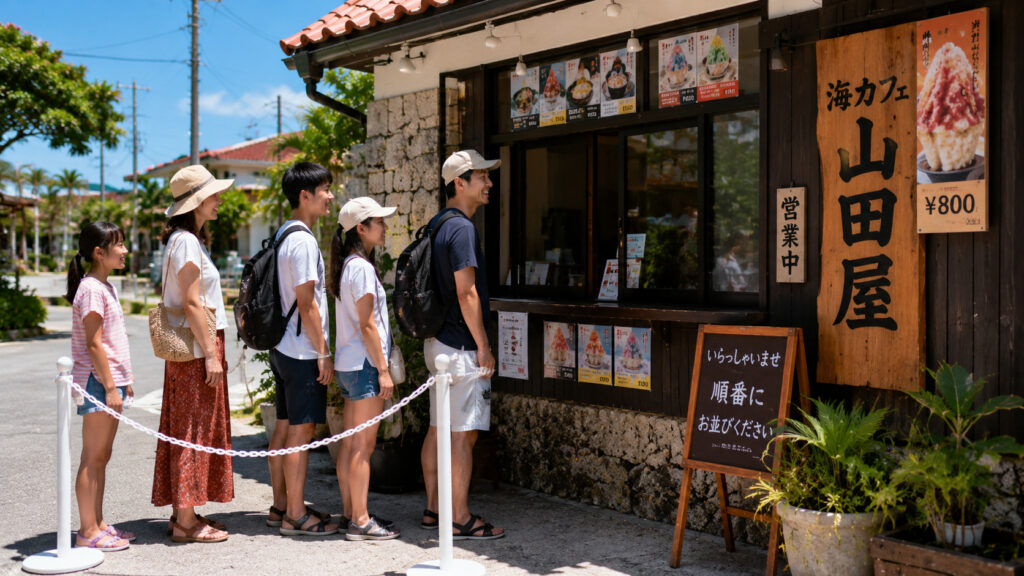
In Japan, one person in line = one person’s right. If friends join later, people behind must wait longer. This feels unfair.
- Line up when everyone is together
- Leaving only bags is usually not allowed
- Line cutting often causes trouble
Leaving the Line Can Lose Your Spot
Many travelers leave the line for:
- Toilet
- Buying drinks
- Taking photos
But in Japan, you may lose your place.
A quick explanation helps avoid misunderstandings. Tell the people in front and behind you before leaving.
Do Not Step Over the Line
A line in Japan is seen as one flow. Some travelers try to take a shortcut and step over the line. This surprises people and is seen as rude.
- Do not cross the line
- Do not step over the line
Small actions show big respect.
Can You Sit on a Bench While Waiting?
Some popular shops use a “bench waiting system”. You sit and wait until staff call your name or number.
But in normal lines, sitting means you left the line.
If you are not sure, ask the staff.
Places Where Lines Are Common
- Popular restaurants
- Bus stops and taxi stands
- Ticket counters
- Convenience stores
- Event venues
- Airports and train stations
- In Okinawa: rental car counters and ferry terminals → Okinawa rental car tips
When There Is No Line but There Is an Order
Japan often uses systems other than lines:
- Hospitals: number tickets
- City offices: number slips
- Food courts: buzzers
- Cafes: waiting list
- Okinawa diners: write your name on a sheet
How to Write Your Name on a Waiting List
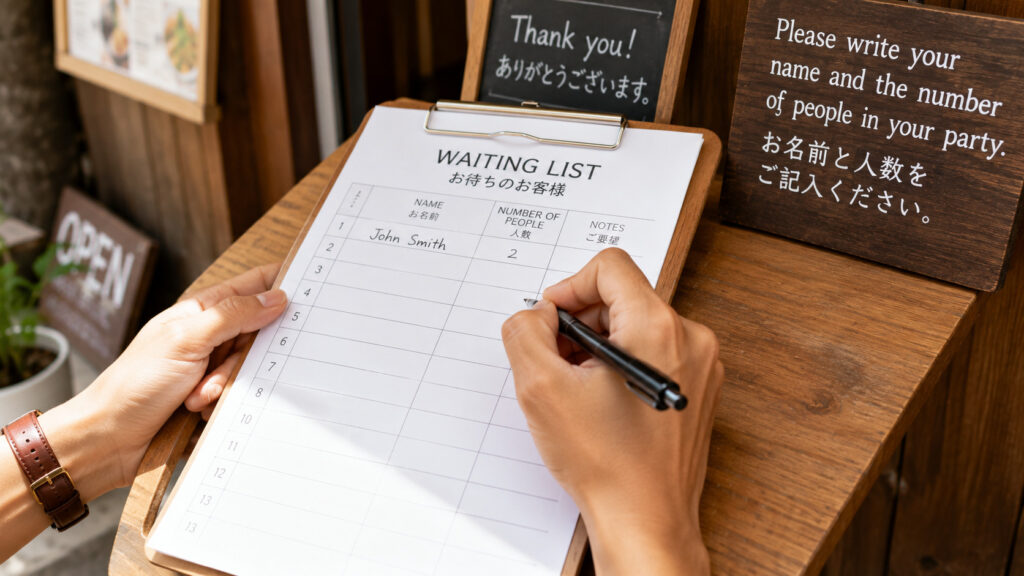
- You can write your name in English letters
- Staff may call your name or your number
- If you are not there, your turn may be skipped
- Stay near the entrance
How to Line Up at Convenience Stores
In Japan, most convenience stores use a single-line queue system. Even if there are three open registers, everyone waits in one single line.
- Stand on the floor markers and wait
- Do not walk directly to an empty counter
- Even if another register becomes available, wait for staff to guide you
- Staff will call you with “Next, please!”
When There Are Two Lines
At stations or events, lines may split left and right. Follow the staff or the floor signs.
Escalator Rules
- Standing side is different by region
- Many places now ask people to stand on both sides
- Follow the signs in each facility
Number Tickets at Popular Shops
Some ramen shops, bakeries, and cafes use a number ticket system.
- Take a ticket
- Come back at the time shown
- If you miss the time, you may lose your turn
- You may not need to wait in line
How to Find the End of the Line
Some places have a sign that says “Last” or “End of the Line”. These signs are usually held by staff or placed at the back of the line. If you are not sure, ask:
“Is this the end of the line?” Most people will understand what you mean.
Tips for Long Lines
- Check busy times on Google Maps
- Go early in the morning
- Choose weekdays
- Check the menu before entering
- Bring water in hot weather
- Popular shops often have 30–60 minute waits
Common Mistakes Travelers Make
- Letting only one family member stand in line
- Joining the line with many people later
- Leaving bags to hold a spot
- Entering from the side
- Stepping over the line
In Japan, these are all seen as cutting in line.
Useful Japanese Phrases
- Saikoubi wa koko desu ka? Is this the end of the line?
- Namae o kaku hitsuyou wa arimasu ka? Do I need to write my name?
- Machijikan wa dorekurai desu ka? How long is the wait?
Why Knowing Line Rules Helps Your Trip
Lines in Japan show respect, order, and fairness. If you understand the rules, you can enjoy your trip with less stress.
Quiet Tip (OkiLocal)
A long line may feel slow. But in Japan, a line often means the shop is safe and trusted. Sometimes the best local restaurants are the ones with a line outside. Waiting can also be part of your travel experience.
FAQ
Q. Can my family members or friends join me in line later? → Basically, no. For casual fast food, a small child joining a parent is okay. However, at popular ramen shops or cafes, everyone must be present from the beginning. If your friends arrive late, the group should join the line together at the back.
Q. Can I leave my bag to keep my spot? → Many shops do not allow this. People should stand in line.
Q. Do I need to wait after getting a number ticket? → It depends on the shop. Some ask you to return at a set time. If you miss the time, you may lose your turn.
Related Guides
👉 Okinawa Travel Guide for First-Time Visitors
👉 Do You Need a Car in Okinawa? (A Local’s Honest Advice)
👉 How Much Time Do You Need in Okinawa?
👉 Why Your Last Day in Okinawa Feels Better With Extra Airport Time


コメント