A Simple Guide for Travelers
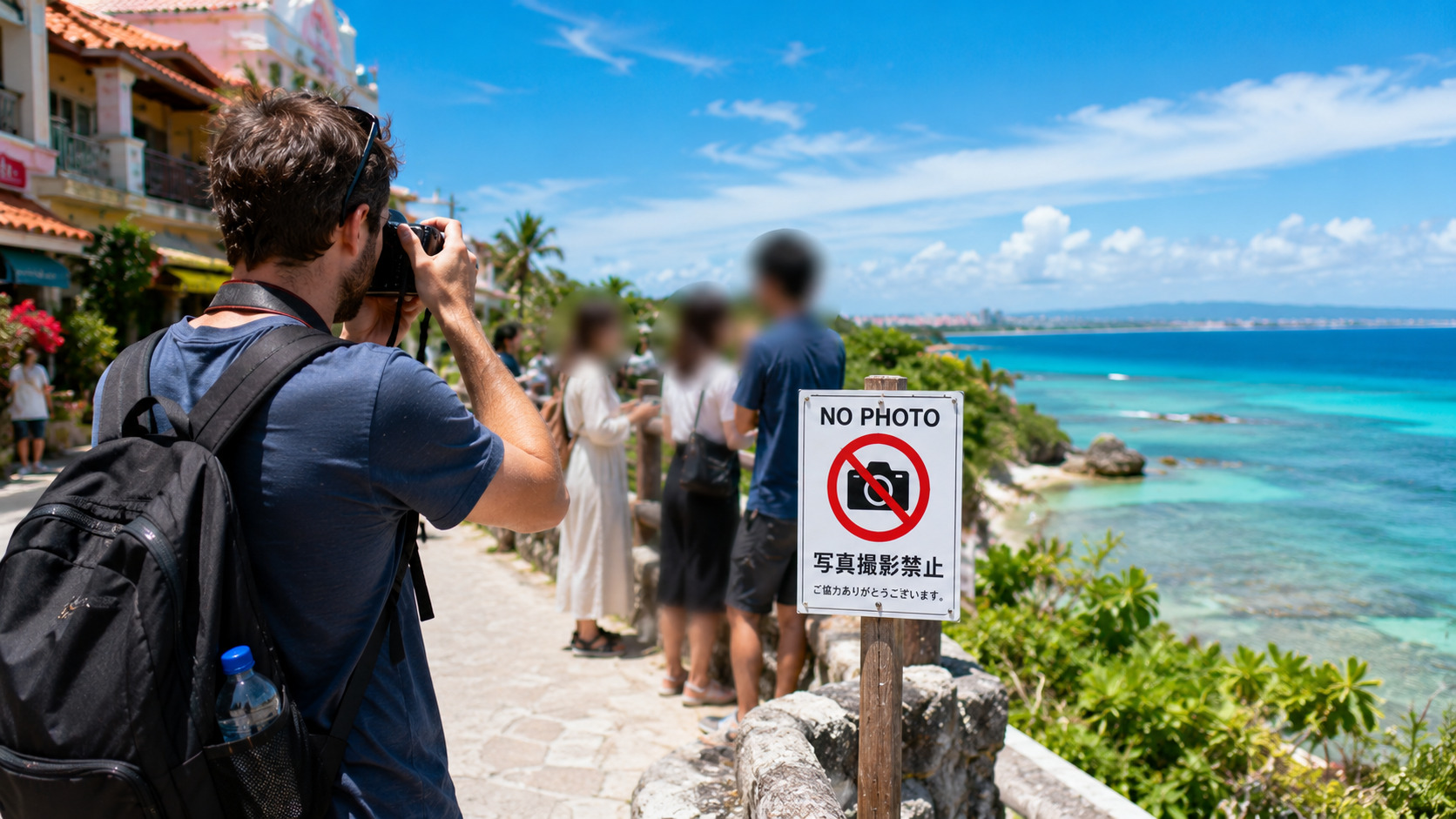
The short answer is simple: Japan is not a “no photo” country, but some places have rules.
These rules are different in each location. If you are not sure, do not take a photo, or ask a staff member. This is the safest choice.
- Why Some Places Do Not Allow Photos
- When People Appear in Your Photo (Very Important)
- Places Where You Should Avoid Taking Photos
- Okinawa-Specific Photo Rules
- Places Where Photos Are OK but You Must Be Careful
- How to Check If Photos Are Allowed
- Useful Japanese Phrases
- Before Posting on SNS
- Quiet Tip
- Summary
- FAQ
Why Some Places Do Not Allow Photos
There are five main reasons:
- Portrait rights: People’s faces are strongly protected
- Religion: Sacred areas do not allow photos
- Copyright: Products and exhibits may be protected
- Safety: Military bases, ports, and factories
- Crowd control: To avoid trouble in busy places
Example: Kyoto’s Gion Area
Some private streets in Gion do not allow photos. This rule was made because some tourists chased maiko and took photos without permission. In Japan, rules often exist to protect local life.
When People Appear in Your Photo (Very Important)
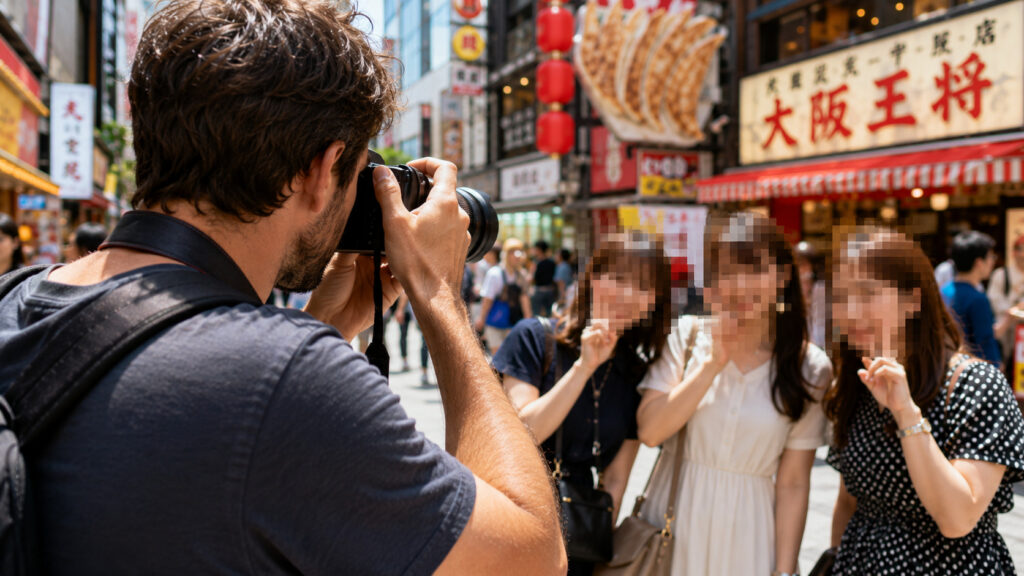
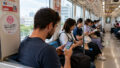
Japan is very sensitive about people appearing in photos.
- A few people in the background is normal
- But do not take photos of people as the main subject
- Be extra careful with children
- Before posting on SNS, check if a face is visible
- Even small faces can be clear when you zoom in
Street Photography Risk
Posting a clear face on SNS without permission may cause a portrait rights problem.
Easy Ways to Avoid Problems
- Take photos from behind
- Blur faces
- Wait until people pass
- Do not zoom in on strangers
Places Where You Should Avoid Taking Photos
Shrines and Temples
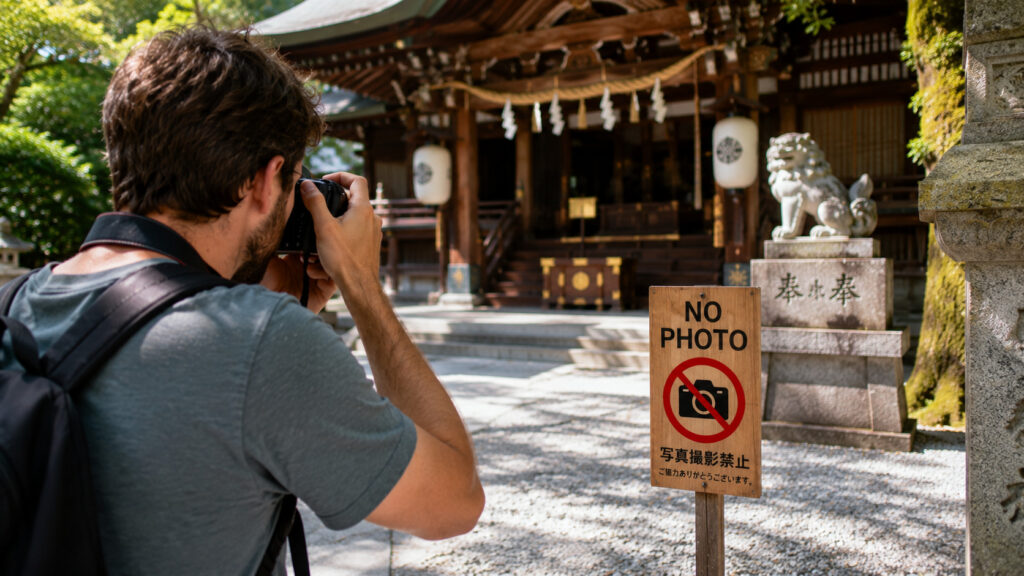
- Inside the main hall is usually not allowed
- Sacred objects are not allowed
- Do not take photos of people praying
- Signs can be small
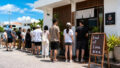
Shops and Supermarkets
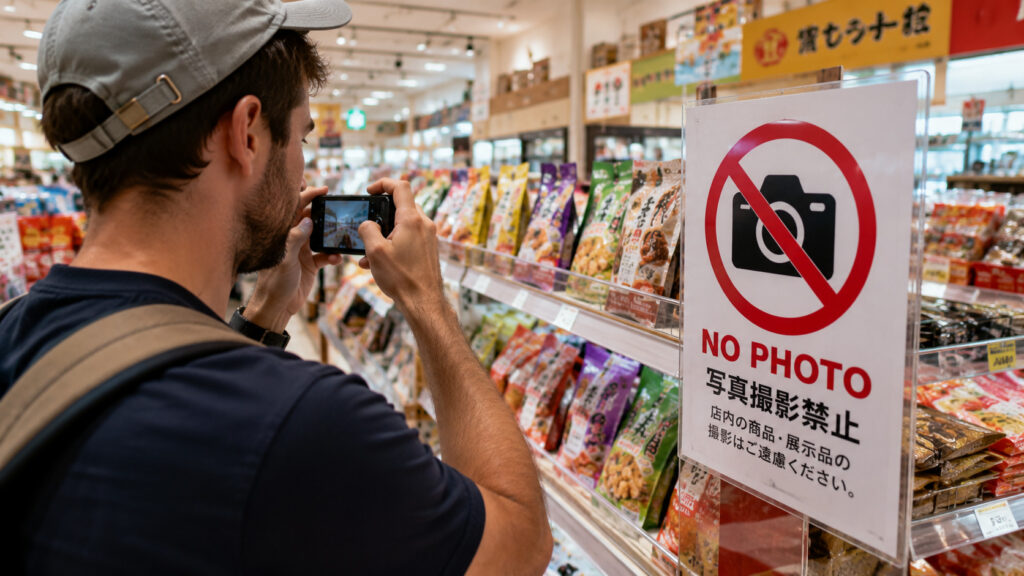
- Many shops do not allow photos inside
- Product shelves are often not allowed
- Reasons include store rules, customer privacy, and security
- Some stores also restrict photos for business or security reasons
- Outside signs and building exteriors are usually OK, but not always
Markets
- Food photos are OK
- Do not take photos of staff without permission
- Avoid blocking narrow aisles
Museums and Galleries
- Many exhibits are protected by copyright
- Only take photos where you see a “photo OK” sign
- “No Photo” means no photography at all
- “No Flash” means photos are OK, but flash is not allowed
- Aquariums, temples, and events often ban flash
Concerts and Theaters
- Almost always no photos
- Even screen light can disturb others
Schools and Children’s Areas
- Avoid taking photos of children without permission
- People in Japan are very careful about children’s privacy
Residential Areas
- Try not to include private houses or car license plates
- Night photography may look suspicious
Military Bases and Ports
- Do not take photos near Self-Defense Force or U.S. bases
- Some port areas also ban photography
Okinawa-Specific Photo Rules
Beaches
- The beach is usually OK
- But these areas are often not allowed:
- Changing rooms
- Showers
- Hotel private beaches
- Lifeguard stations
- Be careful not to capture people in swimsuits
Drones
Okinawa has many drone restrictions.
- Kouri Island
- Manzamo
- Around Churaumi Aquarium
- Ports
- Airport areas
- National parks
Flying a drone without permission may be illegal in Japan. Always check the local rules and get permission if required before flying.
Places Where Photos Are OK but You Must Be Careful
Restaurants
- Some restaurants allow photos
- Some restaurants even encourage food photos
- But always check before taking pictures inside
- Do not capture other customers
- Small local shops may not allow photos
- Many places use a permission system: ask first
Tourist Spots
- Castles, parks, and beaches are usually OK
- Tripods and selfie sticks may be banned in busy areas
- Drones are almost always banned
Street Performers, Maids, Cosplayers
- Do not take photos without permission
- Many of them work under special rules
- Always ask before taking a photo
- SNS posting may not be allowed
How to Check If Photos Are Allowed
- Look for a “no camera” sign
- Look for a “no photo” sign
- Ask a staff member
- If they say yes, you can take a photo
- If they say no, do not take a photo
Useful Japanese Phrases
- Shashin o totte mo ii desu ka? Can I take a photo?
- Gomen nasai, keshimasu. Sorry, I will delete it.
- Arigatou gozaimasu. Thank you.
Before Posting on SNS
- Some places allow photos but not SNS posting
- Check if any faces are visible
- Even small faces can be clear when zoomed in
- Never post photos of children
- Be careful with residential areas and schools
Quiet Tip
Signs in Japan can be small. If you are not sure, do not take a photo. If you ask a staff member, many people will kindly say “Yes.”
Summary
- Japan has many places where photos are OK
- But be careful with people, shrines, shops, museums, schools, and military areas
- Okinawa has special rules for beaches and drones
- If you are not sure, ask or do not take a photo
- Use simple Japanese phrases to avoid trouble
- Check faces before posting on SNS
FAQ
Q. Do I need to ask for permission every time? → No. Most outdoor tourist spots do not require permission. But in shops or when people appear in your photo, asking is the safest choice.
Related Guides
👉 Okinawa Travel Guide for First-Time Visitors
👉 Do You Need a Car in Okinawa? (A Local’s Honest Advice)
👉 How Much Time Do You Need in Okinawa?
👉 Why Your Last Day in Okinawa Feels Better With Extra Airport Time
コメント