A Simple Safety Guide for Travelers
Okinawa has fewer earthquakes than mainland Japan. But it is still important to know what to do. This guide helps you stay calm and safe during your trip.
- Quick Answer
- What You Will Learn
- Earthquake Risk in Okinawa
- What to Do When an Earthquake Happens (Step by Step)
- Tsunami Safety Near the Beach
- Vertical Evacuation (Going Up)
- Hotel Safety Tips
- Rental Car Safety
- If There Is a Blackout
- Useful Information Sources
- Emergency Contacts in Japan
- What to Prepare Before Your Trip
- Quiet Okinawa Recommendation
- Summary
Quick Answer
- Earthquakes are rare in Okinawa, but they can happen
- Near the beach, think about tsunamis more than shaking
- If it shakes: Protect → Check tsunami risk → Evacuate → Get updates
- If no hill is nearby, go to a tsunami evacuation building or a strong upper floor
- In many parts of Okinawa, higher ground is only a short distance inland (location varies)
- Okinawa has experienced tsunami warnings before, and travelers evacuated safely with guidance from hotels and local authorities
- Know your evacuation spot, emergency numbers, and one safety app
What You Will Learn
- Earthquake and tsunami risks in Okinawa
- What to do step by step
- Safety tips for beaches, hotels, and rental cars
- When vertical evacuation is useful
- Emergency contacts
- Simple things to prepare before your trip
Earthquake Risk in Okinawa
Conclusion: Earthquakes are less common, but not zero.
Reason: Large earthquakes are less common around Okinawa than in many parts of mainland Japan.
Details:
- Fewer earthquakes than mainland Japan
- Buildings follow national safety standards
- New hotels and tourist spots are strong
- Tsunamis are more important to think about than shaking
- Okinawa often prepares for typhoons, but basic earthquake and tsunami actions are also helpful
- In recent years, a large earthquake in Taiwan caused a tsunami warning in Okinawa. Travelers evacuated safely with help from hotels and police.
What to Do When an Earthquake Happens (Step by Step)
Conclusion: Follow the steps in order.
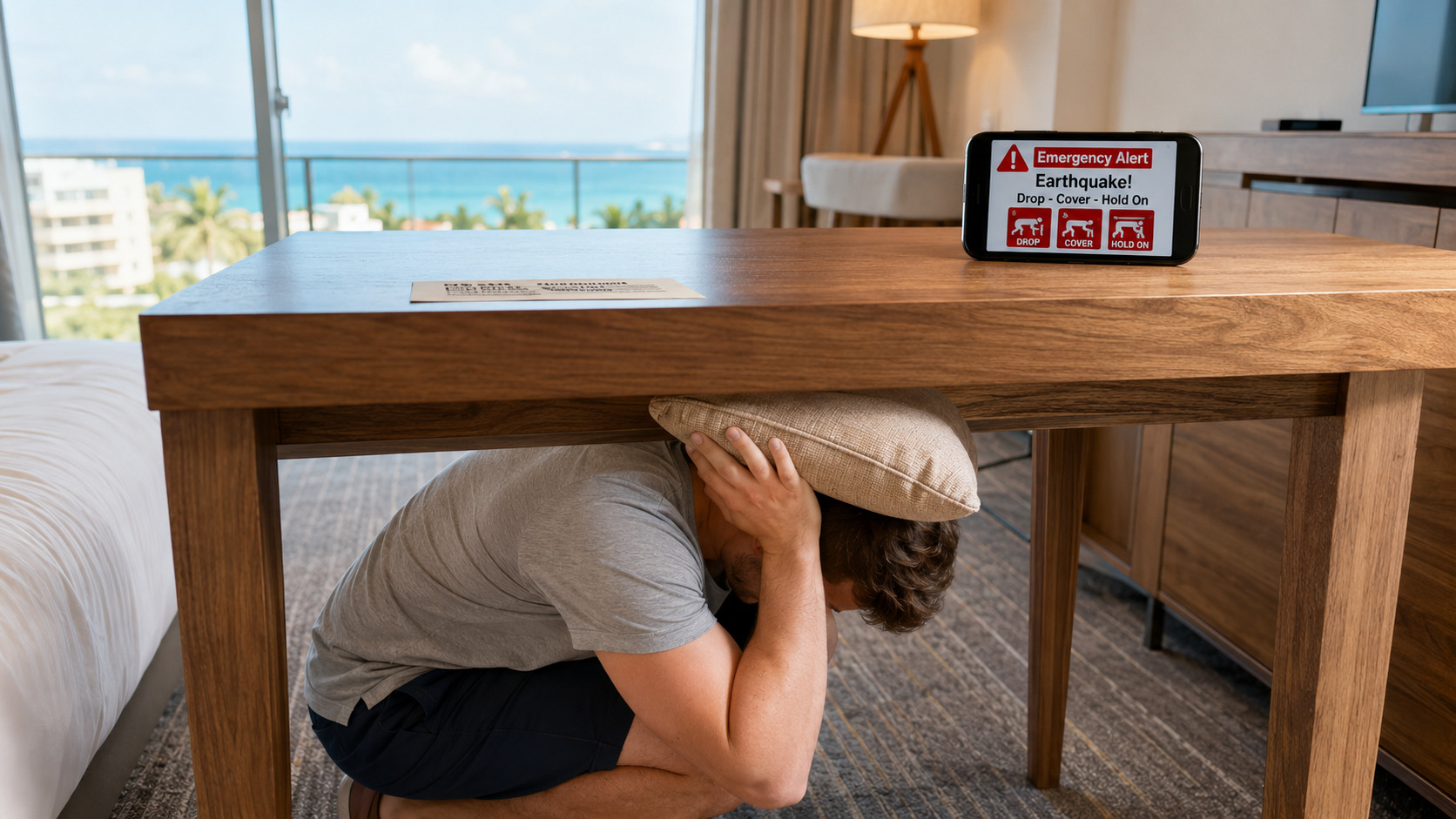
- When it shakes Stay calm. Do not run outside. Your phone may sound a loud emergency alert. This is normal in Japan.
- Protect yourself Get under a table. Protect your head. Do not use elevators.
- When shaking stops Check the exit. Watch for falling items.
- Check tsunami risk This is very important near beaches. Listen for outdoor warning sirens and check alerts on your phone.
- Evacuate (horizontal or vertical) Move inland toward higher ground whenever possible. Go to a hill or a marked tsunami evacuation spot. If no hill is nearby, go to a tsunami evacuation building or a strong upper floor.
- Follow hotel staff and announcements
- Contact your family Use low-power mode.
- Resume your trip only after local authorities confirm it is safe
Tsunami Safety Near the Beach
Conclusion: If you feel strong shaking, move away from the sea.
Reason: Tsunamis can arrive quickly.
Details:
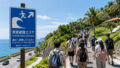
- Be careful at beaches, Kouri Island, Senaga Island, Kouri Bridge, and Kaichu Road
- Move inland away from the sea
- Many areas rise quickly when you walk inland
- But terrain is different in each area, so follow local signs and instructions
Distant Tsunamis
- A tsunami can come even if you do not feel shaking
- If a tsunami warning or advisory is issued, stay away from the coast
Vertical Evacuation (Going Up)
Conclusion: If you cannot reach high ground, go up.
Reason: Strong buildings can protect you.
Details:
- Use official tsunami evacuation buildings first
- Large resort hotels are strong concrete buildings
- Easy for families, night-time, or rainy weather
- Always follow hotel staff instructions
Hotel Safety Tips
- Check the evacuation route when you check in
- Remember your room number (you may forget it during a blackout)
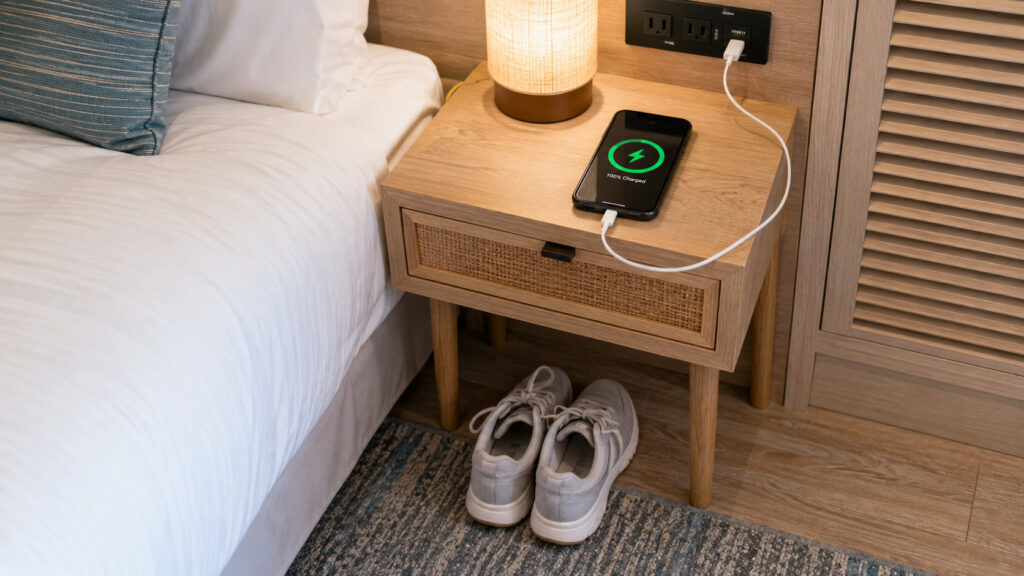
- Keep your shoes near your bed
- Charge your phone near you
- Do not use elevators
- Follow staff and announcements
Rental Car Safety
- Stop in a safe place when shaking starts
- Check tsunami information near the coast
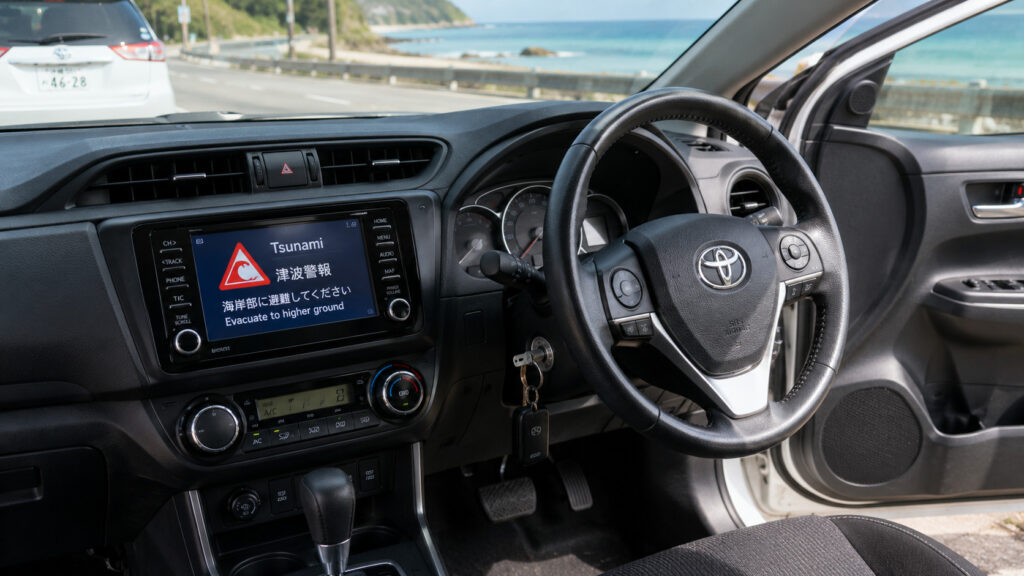
- Navigation systems may show emergency alerts
- Do not make sudden U-turns
- Leave the car and evacuate if a tsunami warning is issued
Important Rule When Leaving Your Car
- Leave the key inside the car
- Do not lock the doors
- Emergency teams may need to move the car
- Take only your valuables
If There Is a Blackout
- Follow hotel staff and announcements
- Do not use elevators
- Save your phone battery
- Download Google Maps Offline before your trip GPS can still show your location without mobile signal. This works only if you downloaded the map before.
- Be careful at night
Useful Information Sources
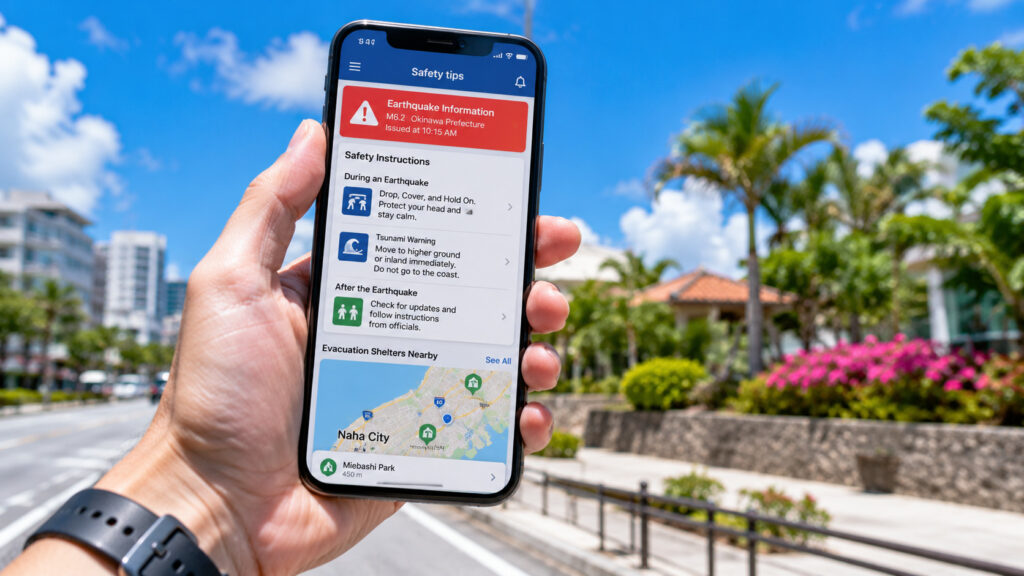
- Safety tips app (earthquake and tsunami alerts in many languages)
- NHK WORLD-JAPAN (English disaster news)
- Google Maps
- Google Maps Offline
- Hotel front desk
Emergency Contacts in Japan
Japan uses the following numbers. You can call these numbers even without a local SIM card or from a public payphone for free.
- 119 (fire and ambulance)
- 110 (police)
- Many operators can arrange interpretation if needed
- Okinawa Multilingual Call Center (24 hours)
- U.S. Consulate in Okinawa
What to Prepare Before Your Trip
- Save tsunami evacuation spots near your hotel in Google Maps
- Check your hotel’s evacuation route
- Install the Safety tips app
Quiet Okinawa Recommendation
Earthquakes during a trip to Okinawa are very rare. But knowing simple steps helps you feel calm and safe. Most travelers never experience an earthquake during their trip to Okinawa. Knowing these simple steps helps you relax and enjoy Okinawa with greater peace of mind.
Summary
- Earthquakes are rare but possible
- Think about tsunamis near the beach
- Follow the steps: Protect yourself → Check tsunami risk → Evacuate → Get updates
- Use evacuation buildings or strong upper floors if needed
- Terrain varies, so follow local signs
- Prepare one safety app and one evacuation spot
- Do not return to the coast until local authorities confirm it is safe
- Do not go back to watch the waves
- With simple preparation, you can enjoy Okinawa with peace of mind
Related Guides
👉 Okinawa Travel Guide for First-Time Visitors
👉 Do You Need a Car in Okinawa? (A Local’s Honest Advice)
👉 How Much Time Do You Need in Okinawa?
👉 Why Your Last Day in Okinawa Feels Better With Extra Airport Time

コメント