- 1. Typhoons in Okinawa: What You Should Know
- 2. How Typhoons Affect Your Trip
- Typhoon Travel Impact Guide
- 3. What to Do on the Typhoon Day
- 4. Wi-Fi and Mobile Signal May Become Weak
- 5. Useful Items During a Typhoon
- 6. Important: What Happens During a Blackout
- 7. After the Typhoon Passes
- 8. Emergency Contacts in Okinawa
- Ending Note
1. Typhoons in Okinawa: What You Should Know
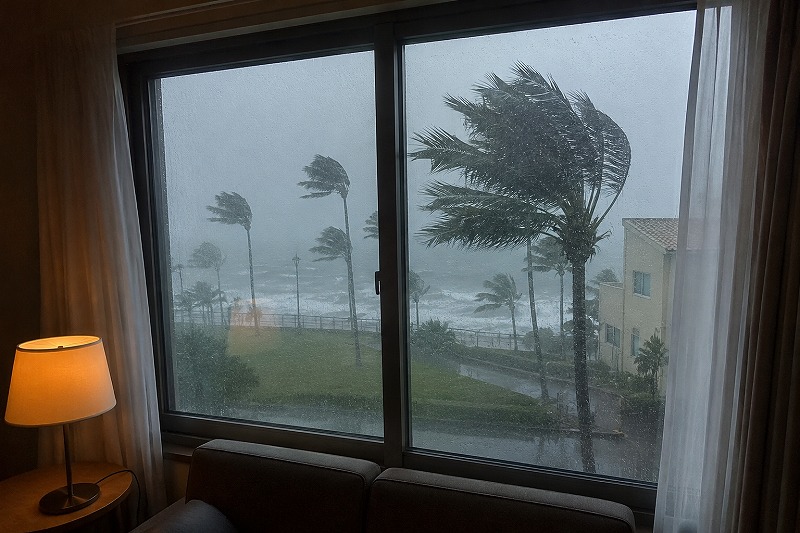
Typhoons in Okinawa are often stronger than those in mainland Japan. But you can stay safe if you know the basics. This guide explains only what travelers need.
2. How Typhoons Affect Your Trip
Typhoons can change your plans. Here is a simple table to help you understand the impact.
Typhoon Travel Impact Guide
| Category | Impact Level | Travel Advice |
|---|---|---|
| Flights | ★★★★★ | Airlines cancel early. Use the official app. |
| Beach & Sea | ★★★★★ | Very dangerous. Do not go near the water. |
| Rental Cars | ★★★★☆ | Early return may be required. Save contacts. |
| Tourist Spots | ★★★★☆ | Outdoor spots close. Moving around is risky. |
| Hotel Restaurants | ★★★★☆ | Menus may be limited. Ask the front desk and reserve early. |
| Hotels | ★★☆☆☆ | Buildings are strong. Stay inside and relax. |
3. What to Do on the Typhoon Day
Stay Inside
Strong winds can move dangerous objects. So the safest choice is to stay inside your hotel.
Convenience Stores May Close When Transport Stops
In Okinawa, many convenience stores and supermarkets close when buses or the Yui Rail stop.
Travelers often think “the store near my hotel will stay open.” But on typhoon days, many stores close for safety.
Also:
If the morning news announces that “buses will stop running at 10:00 AM,” consider that your last chance to buy supplies.
Buy drinks and snacks before the wind becomes strong.
Use TV and Google Translate for Real-Time Updates
Japanese TV shows typhoon updates in an L‑shaped frame on the screen. This includes bus and train information.
If you cannot read Japanese:
Point your phone’s Google Translate camera at the TV screen. Words like “Suspended” or “Time” will appear in English.
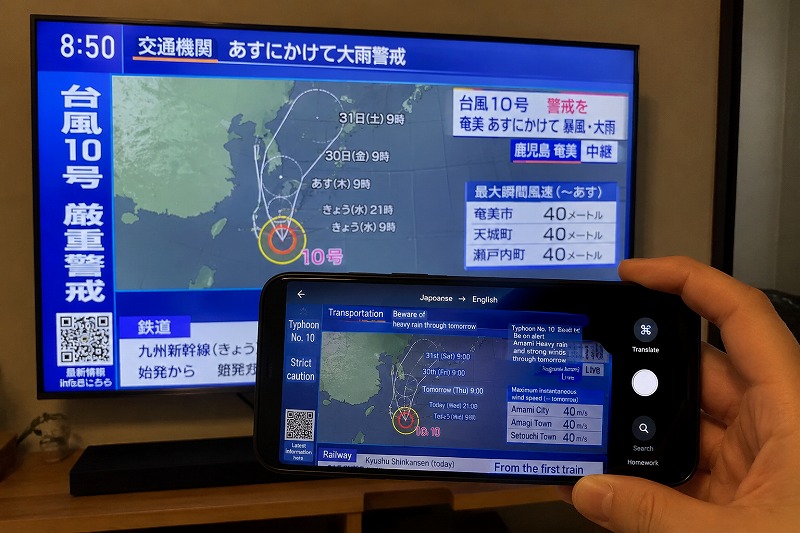
This helps you know your shopping window and transport status.
Enjoy a Quiet Meal in Your Hotel Room
Restaurants close for safety during a typhoon. If you buy instant noodles or local snacks the day before, you can enjoy a slow and quiet meal in your room.
(You can link to your Quiet Hotel Meal article here.)
4. Wi-Fi and Mobile Signal May Become Weak
Typhoons can make the signal unstable. Save important information as screenshots.
The northern area has weak signal spots.
You can read more in the Weak Signal Survival Guide.
5. Useful Items During a Typhoon
- Drinks and snacks
- Power bank (very useful during power outages)
- Charging cable
- Medicine
- Towel
- Saved emergency contacts
- Offline Google Maps
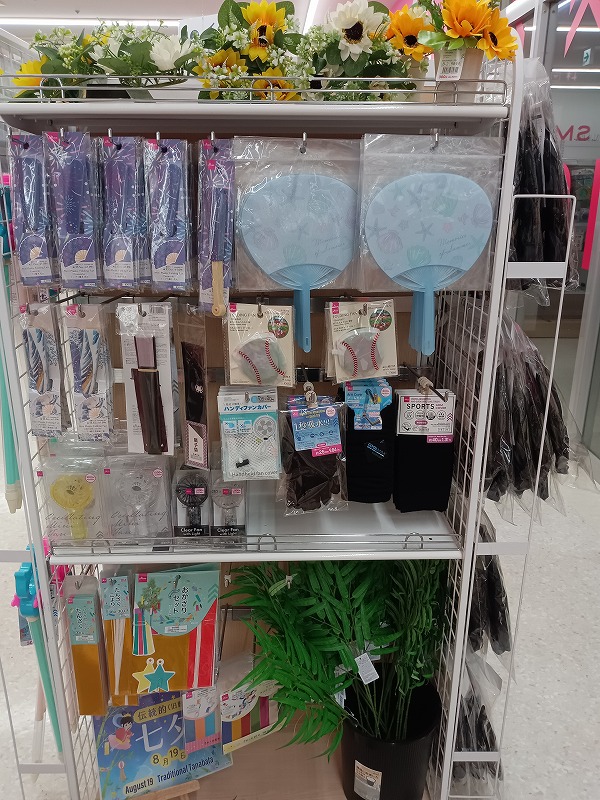
If you need a small light, you can easily pick up a compact LED light at DAISO (a popular Japanese 100‑yen / discount store). It is lightweight, budget-friendly, and easy to pack.
6. Important: What Happens During a Blackout
In some areas, power outages may last for one to three days after a strong typhoon.
When the power goes out:
- Air conditioners stop (and many windows should remain closed due to strong winds)
- Rooms become very hot and humid
- Elevators may stop
Tips
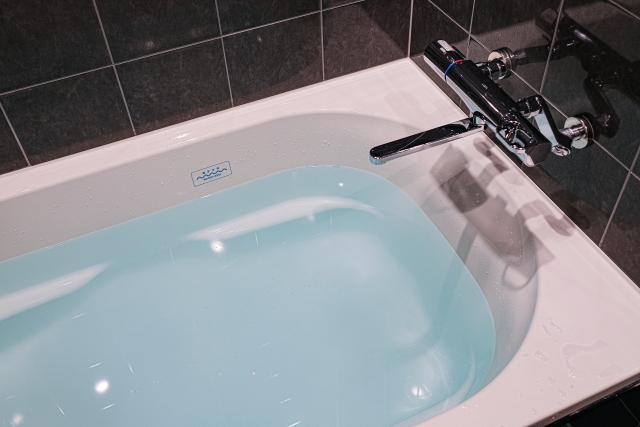
- Fill your bathtub with cool water before the power goes out → Helps you stay cool and can be used for flushing toilets if water stops
- Buy a simple Japanese hand fan (uchiwa) at DAISO → Light, cheap, and very helpful during a blackout
- Keep your power bank fully charged
These small steps make a big difference.
7. After the Typhoon Passes
Flooded Roads and Fallen Trees
The northern area (Nago, Motobu, Nakijin, Kunigami) may take longer to recover.
A fallen tree or landslide can block the main road, and road travel may become difficult for a while. Do not rush to drive up north right after a typhoon. Ask your hotel staff about road conditions first.
Do Not Enter the Sea
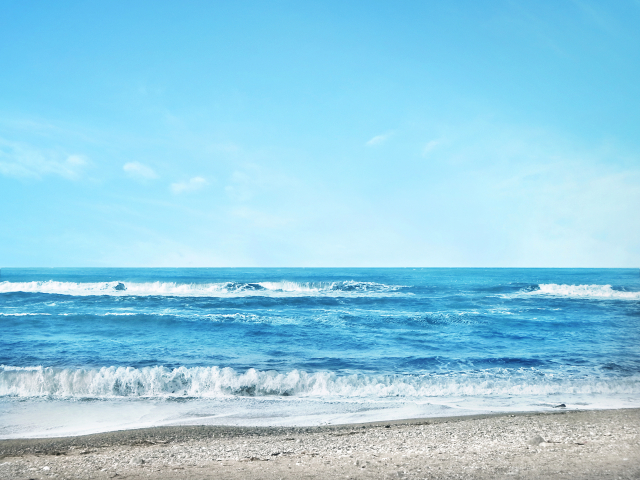
Rip currents are very strong after a typhoon. Even if the sky is blue, the sea is dangerous.
Rental Car Return Will Be Busy
Many travelers return cars at the same time. Leave early and keep extra time.
8. Emergency Contacts in Okinawa
For more details, see the Okinawa Emergency Contact List.
Here are the numbers you may need:
- Police: 110
- Ambulance / Fire: 119
- Sea accidents: 118
- U.S. Consulate in Okinawa
- Your hotel front desk
- Your rental car company
- Your airline customer service
- Okinawa Multilingual Medical Support Call Center (24 hours)
Ending Note
Typhoon information may feel overwhelming. But you only need to remember a few key points.
Most typhoons pass within a day or two. Typhoons are a normal part of life in Okinawa. Hotel staff know what to do, so you can stay calm and wait for the weather to improve.
コメント