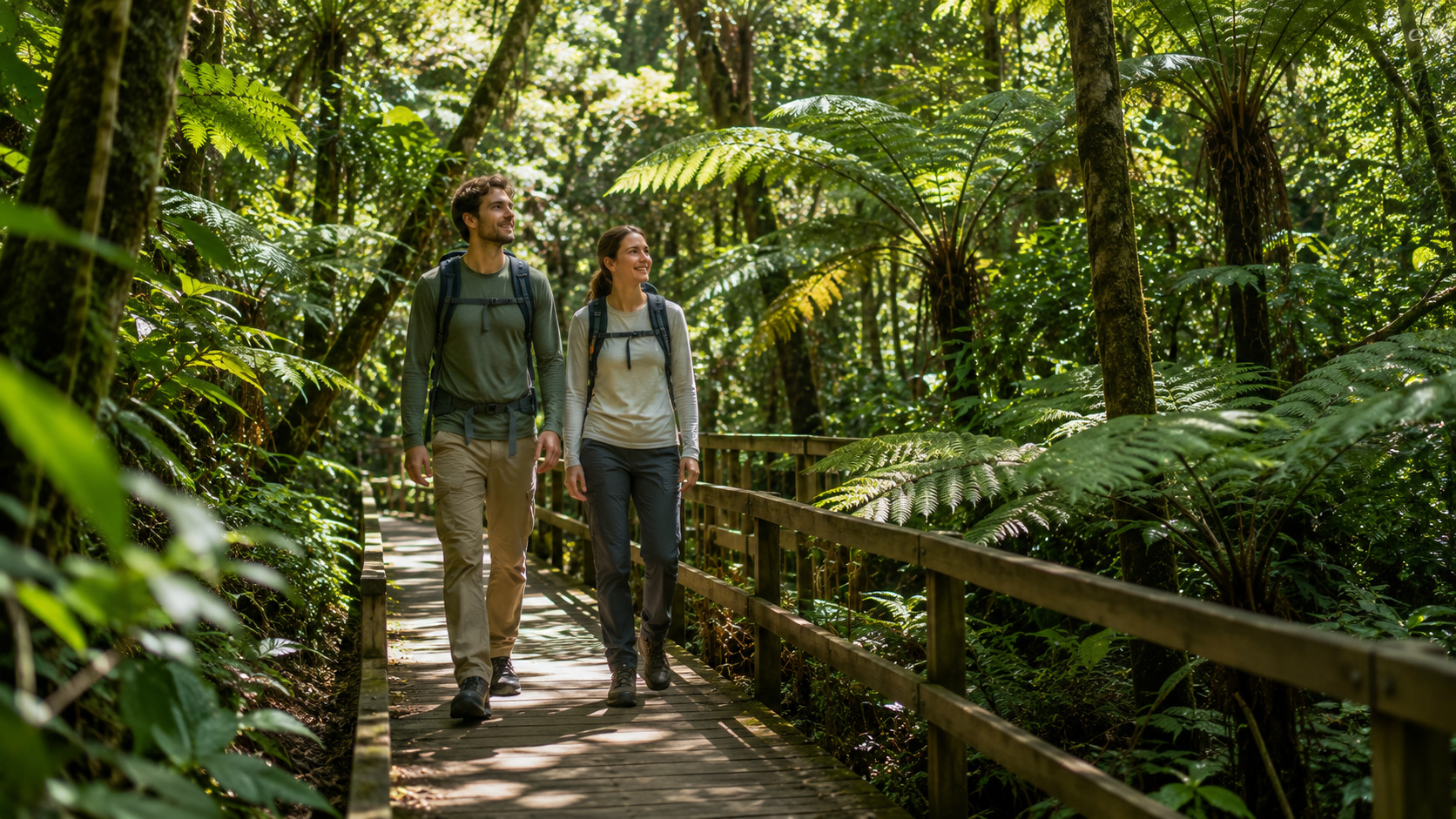
Simple safety guide for first‑time visitors to Yambaru
Conclusion: You can avoid habu snakes with simple steps. Most travelers never see a habu in Okinawa.
Reason: Habu live in the forests of northern Okinawa. Tourist areas and walking paths are usually safe.
Detail: This guide shows what you can do today to stay safe.
Choose Safe Places to Walk
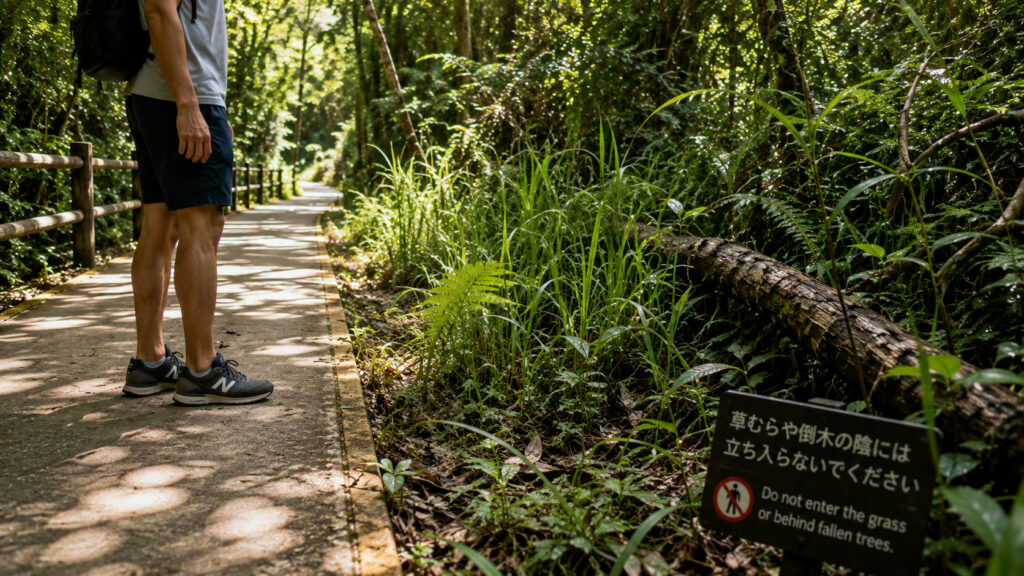
- Use paved roads and walking paths
- Stay out of tall grass and bushes
- Do not walk over fallen trees
- Do not enter forests at night
Wear Safe Clothing
- Wear closed‑toe walking shoes
- Wear long pants
- Wear long sleeves (lightweight fabrics are fine)
- Wear bright clothing so others can see you easily
Safe Habits
- Watch your step while walking
- Check around you when you stop
- Do not let children play in leaves or grass
Quiet Tip: Habu snakes do not chase people. If you stay away, you are safe.
Why You Need to Be Careful in Yambaru
- Yambaru is a subtropical forest
- Habu are active from evening to night
- They hide in grass, rocks, and under fallen trees
Places Where Habu May Appear
- Tall grass and bushes
- Gaps in stone walls or rocks
- Under fallen trees
- Around old buildings
- On roads at night (the road stays warm after sunset)
Situations Travelers Should Be Careful About
- Forest walks in Ogimi or Higashi Village
- Nature trails in Yambaru National Park
- Playing near rivers where there is tall grass
- Stopping on the roadside at night
- Around campgrounds
Quiet Tip: Walking paths and viewpoints are safe. Be careful only when you leave the path and enter natural forest.
What to Do If You See a Habu
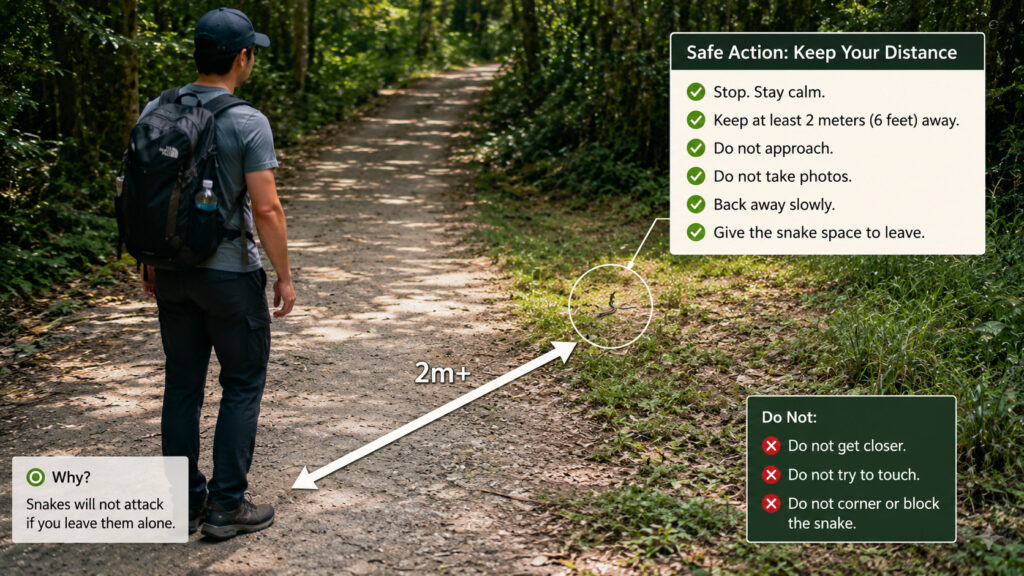
- Do not go close (Keep a distance of at least 2 meters / 6.5 feet)
- Do not try to scare it away (Do not hit it or use a stick. Step back slowly.)
Quiet Tip: Habu attack only when people come too close.
If You Get Bitten
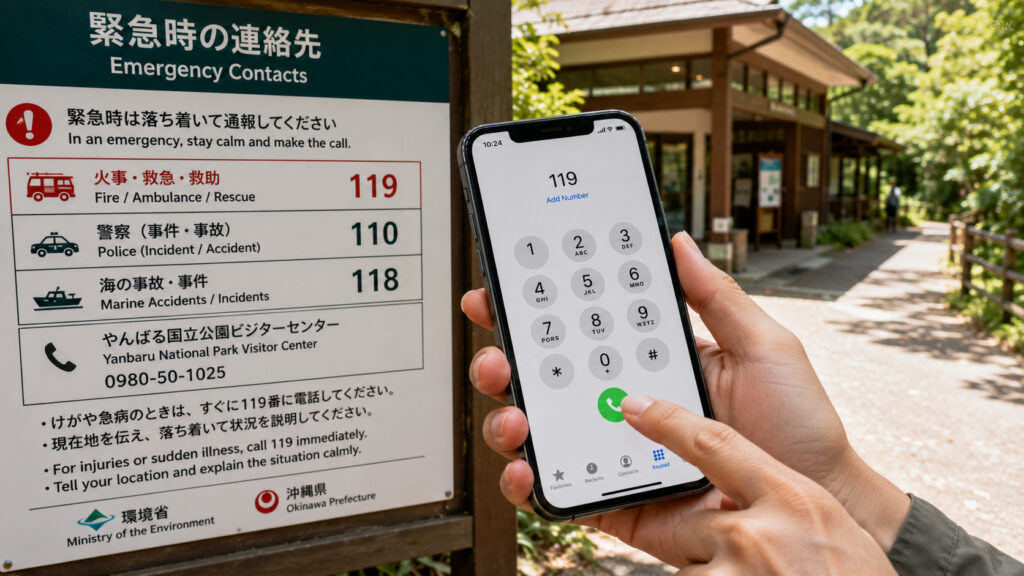
- Move to a safe place
- Do not rub the bite
- Do not cut the skin or suck the venom
- Do not cool the bite
- Call 119 or ask someone nearby to call an ambulance (Even if your phone shows “No Service,” try calling 119. An emergency call may still connect.) (Multilingual support may be available.)
- Ask staff or local people for help
Quiet Tip: Quick action is important. If you are not sure, call 119.
Habu Risk by Area
- Nago City (downtown): Very low risk
- Motobu (Churaumi Aquarium area): Safe for tourists
- Ogimi / Higashi Village: Be careful in natural forest
- Kunigami (Yambaru National Park): Paths are safe; forest areas need care
Quiet Tip: Tourist areas and hotels are safe. Be careful only in natural forest.
Useful Items to Carry
- Smartphone (signal may be weak in mountains)
- Closed‑toe walking shoes
- Long pants
- Small light (useful for parking areas at night)
Actions You Must Not Do
- Do not look for habu snakes
- Do not go close to take photos
- Do not try to chase or hit the snake
Summary: Three Simple Rules
① Walk only on safe paths ② Do not enter forests at night ③ Watch your step and stay out of tall grass
Quiet Tip: Yambaru is a quiet and beautiful place. You do not need to avoid Yambaru. With a little preparation, you can enjoy it safely. The forest is beautiful, and most visitors never see a habu.
Related Guides
👉 Okinawa Travel Guide for First-Time Visitors
👉 Do You Need a Car in Okinawa? (A Local’s Honest Advice)
👉 How Much Time Do You Need in Okinawa?
👉 Why Your Last Day in Okinawa Feels Better With Extra Airport Time


コメント