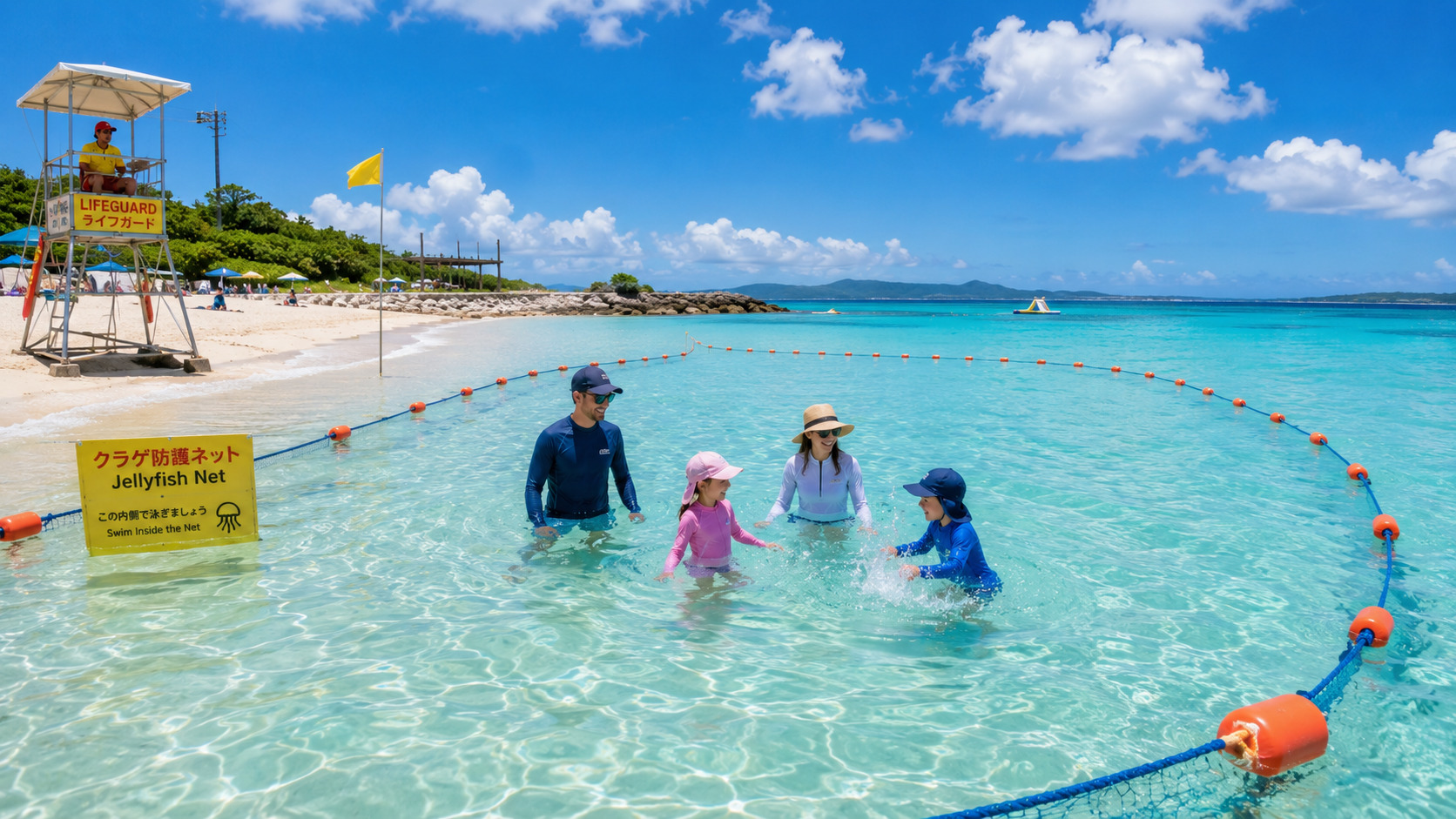
Simple safety guide for first‑time visitors
Okinawa has beautiful beaches. But jellyfish are more common during certain seasons. This guide helps you make safe decisions before swimming.
- Conclusion: Jellyfish season is July to October
- Why jellyfish increase in summer and autumn
- Simple jellyfish safety tips you can do today
- What is a jellyfish net?
- Common jellyfish in Okinawa (you do not need to memorize)
- If you get stung (simple and safe steps)
- Jellyfish risk by area
- When jellyfish come close to the beach
- Related guides for safe swimming
- Summary
Conclusion: Jellyfish season is July to October
Summer and early autumn are the peak months. Knowing this helps you plan your beach day safely.
Quiet Tip: A little knowledge makes your trip more comfortable.
Why jellyfish increase in summer and autumn
- Warm water: The sea around Okinawa is warmer than around mainland Japan.
- Wind and typhoons: Strong wind can push jellyfish toward the beach.
- More swimmers: Busy beaches mean higher chance of accidental contact.
Simple jellyfish safety tips you can do today
Choose safe places:
- Swim at managed beaches (with lifeguards and jellyfish nets)
- Stay inside the jellyfish net area
Protect your skin:
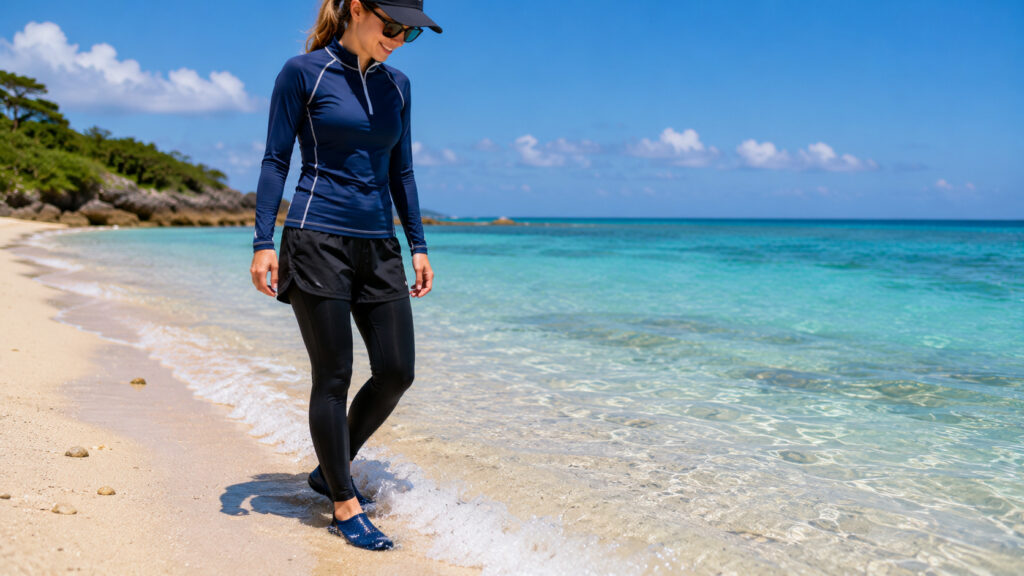
- Wear a rash guard
- Use jellyfish‑repellent sunscreen (extra protection)
- Wear marine shoes
Decide safely at the beach:
- Follow lifeguard instructions
- Do not swim in the evening Evening light makes it hard to see waves, rocks, and jellyfish. Enjoy the sunset from the beach instead. It is a quiet and beautiful moment.
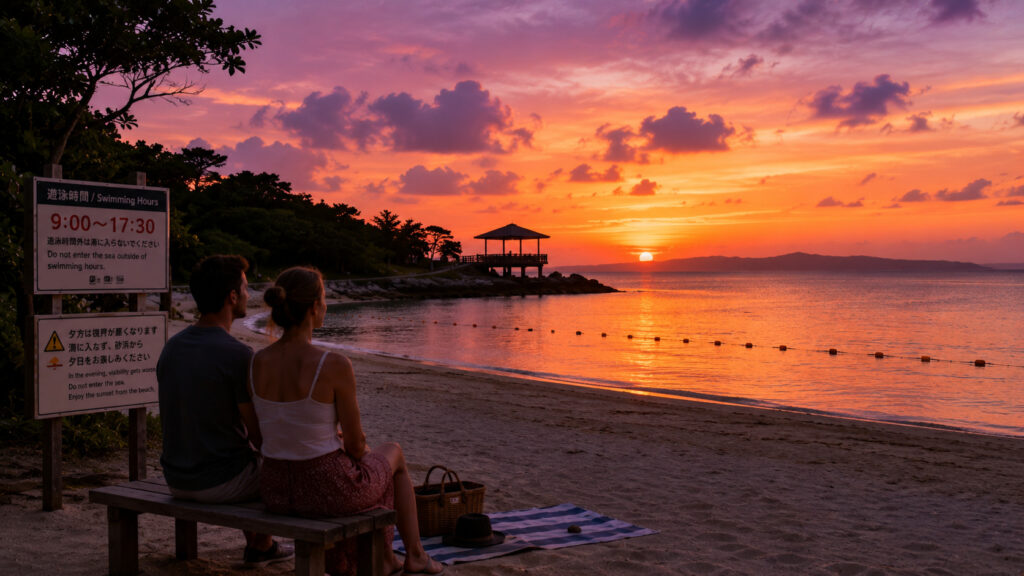
Quiet Tip: “Managed beach + skin protection + lifeguard advice” is enough for most travelers.
What is a jellyfish net?
- A safety net set at many managed beaches
- It reduces jellyfish entering the swimming area
- But it is not 100% perfect
- Do not go outside the net
Even with a net, always follow lifeguard instructions. Swimming may be restricted when sea conditions change.
Quiet Tip: If you worry about jellyfish, choose a beach with a net.
Common jellyfish in Okinawa (you do not need to memorize)
- Box jellyfish (most dangerous in Okinawa)
- Sea nettle (common in summer)
- Portuguese man o’ war (blue, balloon‑like, appears after strong wind)
Quiet Tip: You do not need to know the species. Just follow the safety tips.
If you get stung (simple and safe steps)
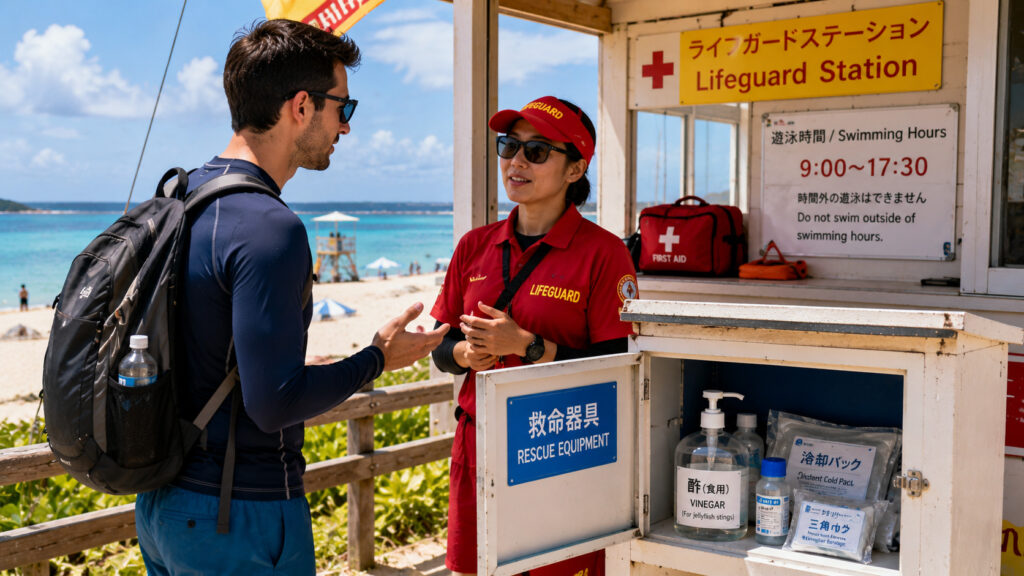
- Leave the water immediately
- Do not rub the skin
- Ask lifeguards or staff for help
- Get medical help if the pain is severe
Good to know:
If it is a box jellyfish: Some managed beaches provide vinegar for box jellyfish stings.
If it is a Portuguese man o’ war: Do not use vinegar.
If you are not sure: Do not decide by yourself. Leave the water, do not rub, and follow lifeguard instructions.
Rinsing with seawater is only a quick first step. Lifeguard advice is the most important.
Quiet Tip: Do not panic. Do not rub. Ask staff. These three steps are enough.
Jellyfish risk by area
Jellyfish risk changes by season, sea conditions, and beach management.
- North (Motobu, Nago): Many natural beaches. Jellyfish are more common in season.
- Central (Onna Village): Many hotel beaches with nets and lifeguards. Easy to stay safe.
- South (Naha, Nanjo): Jellyfish may drift after strong wind.
When jellyfish come close to the beach
- Summer to autumn
- After strong wind
- After a typhoon
Quiet Tip: Check the weather app. It helps you understand the sea condition quickly.
Related guides for safe swimming
- Sea animals to watch for
- How to spot rip currents
- Beach flag meanings
- UV protection in Okinawa
Summary
Remember these three points:
① Choose a managed beach ② Protect your skin ③ Follow lifeguard instructions
Quiet Tip: Simple preparation lets you relax and enjoy the ocean with confidence.
Related Guides
👉 Okinawa Travel Guide for First-Time Visitors
👉 Do You Need a Car in Okinawa? (A Local’s Honest Advice)
👉 How Much Time Do You Need in Okinawa?
👉 Why Your Last Day in Okinawa Feels Better With Extra Airport Time

コメント