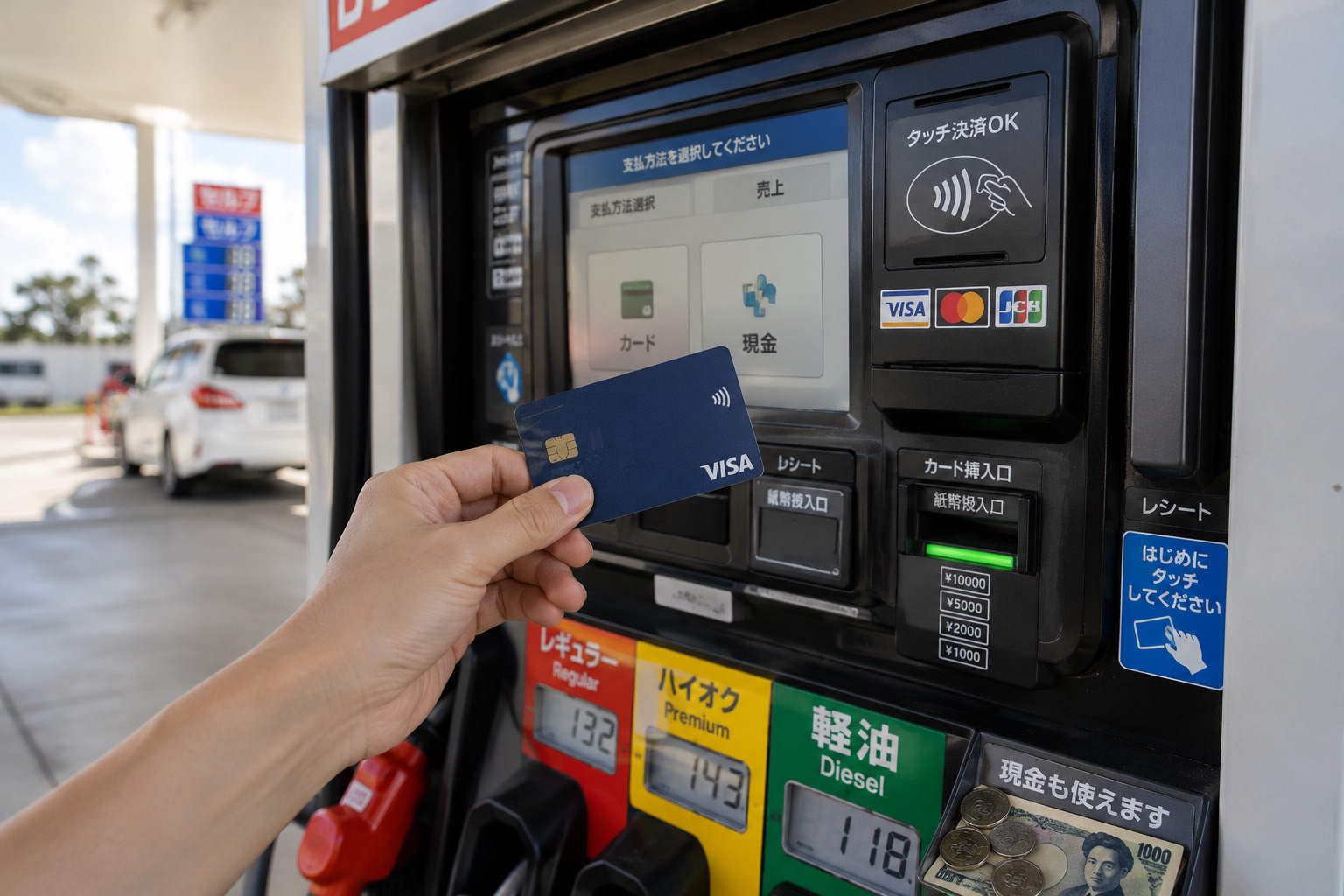
Do You Need Cash?**
- 0. Conclusion: Credit cards work at most gas stations
- 1. Why payment feels confusing in Japan
- 2. Payment methods you can use
- 3. Card brands you can use
- 4. Do you need cash?
- 5. Important notes for foreign cards
- 6. Late‑night and unmanned stations
- 7. How the “Change Machine” works
- 8. What to do if payment does not work
- 8.3 Quiet Okinawa Recommended Setup
- 9. Final message from Quiet Okinawa
- Related Articles
0. Conclusion: Credit cards work at most gas stations
Quiet Okinawa’s answer:
Use a credit card. Carry a little cash. That is enough.
Why
- Visa and Mastercard work at most stations
- Some foreign cards may not work at certain stations
- Cash helps in late‑night or emergency cases
1. Why payment feels confusing in Japan
Japan’s gas stations work differently from many other countries.
- Self‑service machines have unique steps
- Foreign cards may show errors
- A “Temporary Hold” happens before fueling
- Contactless payment is not always supported
- No staff late at night
Quiet Okinawa wants to help you stay calm and make clear choices.
2. Payment methods you can use
2.1 Credit cards (most reliable)
- Visa
- Mastercard
- JCB
- AMEX
- Discover / Diners
2.2 Debit cards
- Visa Debit
- Mastercard Debit
- Wise / Revolut
→ They often work, but some machines may reject them.
2.3 Mobile payment (Apple Pay / Google Pay)
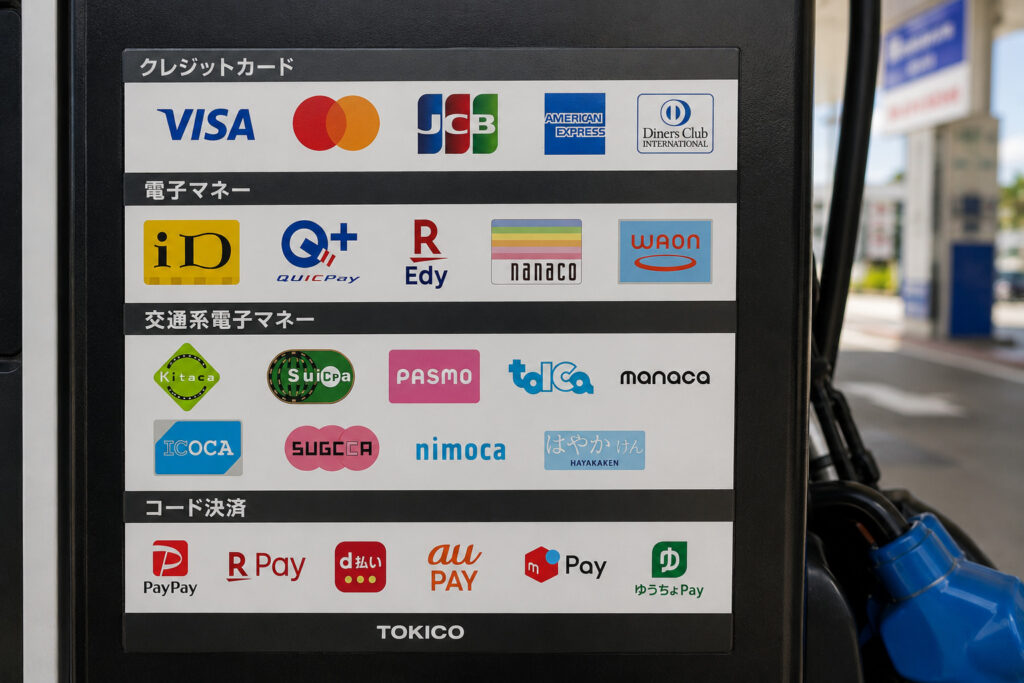
- More stations support it now
- But not all stations accept it
- Apple Pay logo ≠ Apple Pay usable
- Many machines only support QUICPay / iD / Japan‑issued contactless cards
- Foreign cards may not connect to Japan’s payment networks (a simple error message may appear)
Quiet Okinawa’s advice: Mobile payment is useful, but always carry a physical card.
2.4 Cash
- Not required in most cases
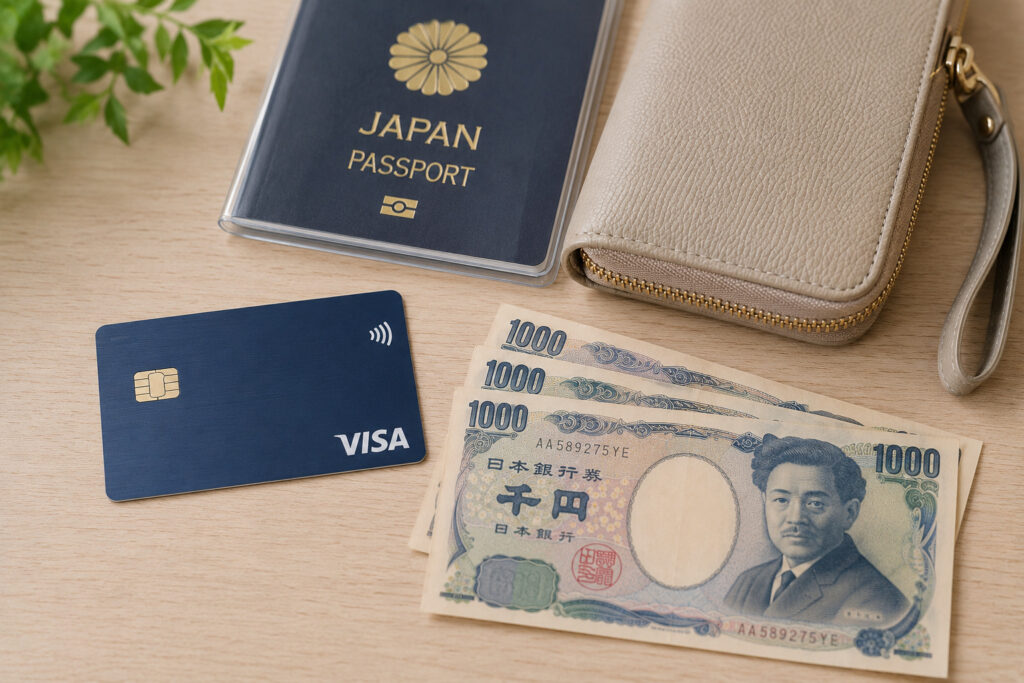
- But 3,000–5,000 yen makes your trip safer
3. Card brands you can use
Work at most stations
- Visa
- Mastercard
Usually OK
- AMEX
- Discover
- Diners
Be careful in these cases
- Small local stations
- Some northern Okinawa stations accept fewer brands
Quiet Okinawa’s tip: Carry Visa or Mastercard when driving to rural areas.
4. Do you need cash?
Conclusion:Not really. But 3,000–5,000 yen is safe.
Many travelers never use the cash they bring. It is simply a backup plan.
Why:
- Most stations accept credit cards
- But foreign cards can fail
- No staff late at night
- Cash solves many problems quickly
Quiet Okinawa’s safe amount: 3,000–5,000 yen (20–35 USD)
5. Important notes for foreign cards
5.1 Temporary Hold: Do not worry
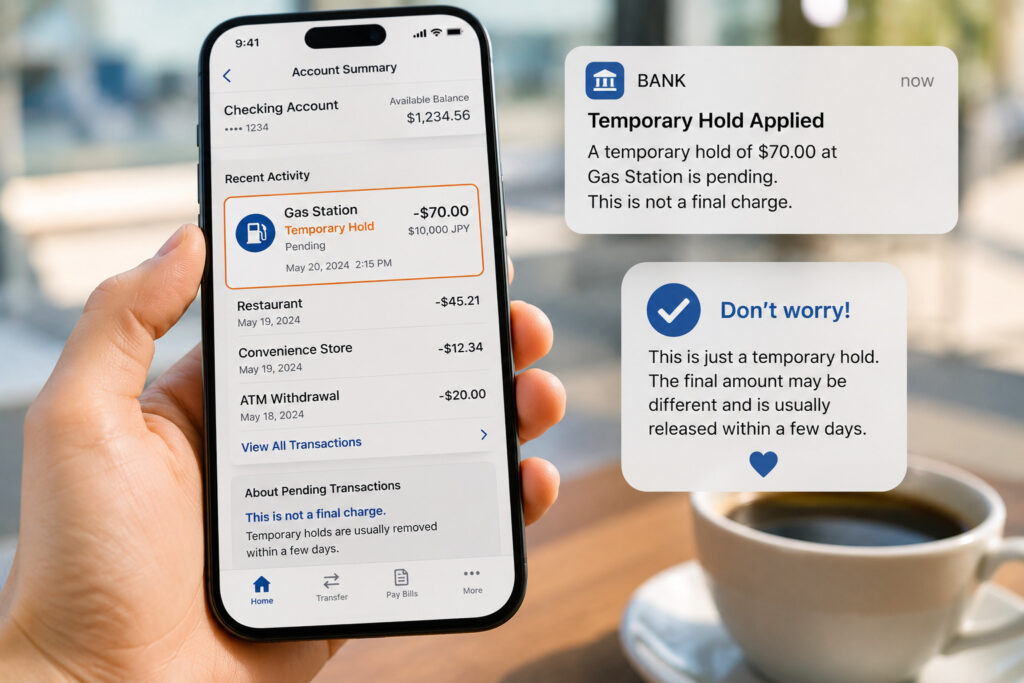
Self‑service stations often place a Temporary Hold of 5,000–15,000 yen.
Example: Before fueling:10,000 yen is temporarily held After fueling:Only the real amount is charged The rest returns automatically (minutes to days)
Quiet Okinawa’s message: This is completely normal. The final charge will replace the temporary hold automatically. You can stay calm. The system will handle it for you.
5.2 Foreign cards may show errors
- Some machines do not work well with foreign cards
- AMEX and debit cards fail more often
- This is a machine issue, not your card
Quiet Okinawa’s advice: If it fails, go to a full‑service station or another station.
5.3 PIN code may be required
- Some machines need a 4‑digit PIN
- Signature is not accepted
Quiet Okinawa’s advice: Check your PIN before your trip.
6. Late‑night and unmanned stations
- No staff after midnight
- No help if your card fails
- Some machines do not support contactless payment
Quiet Okinawa’s tip: Carry both a credit card and some cash at night.
7. How the “Change Machine” works
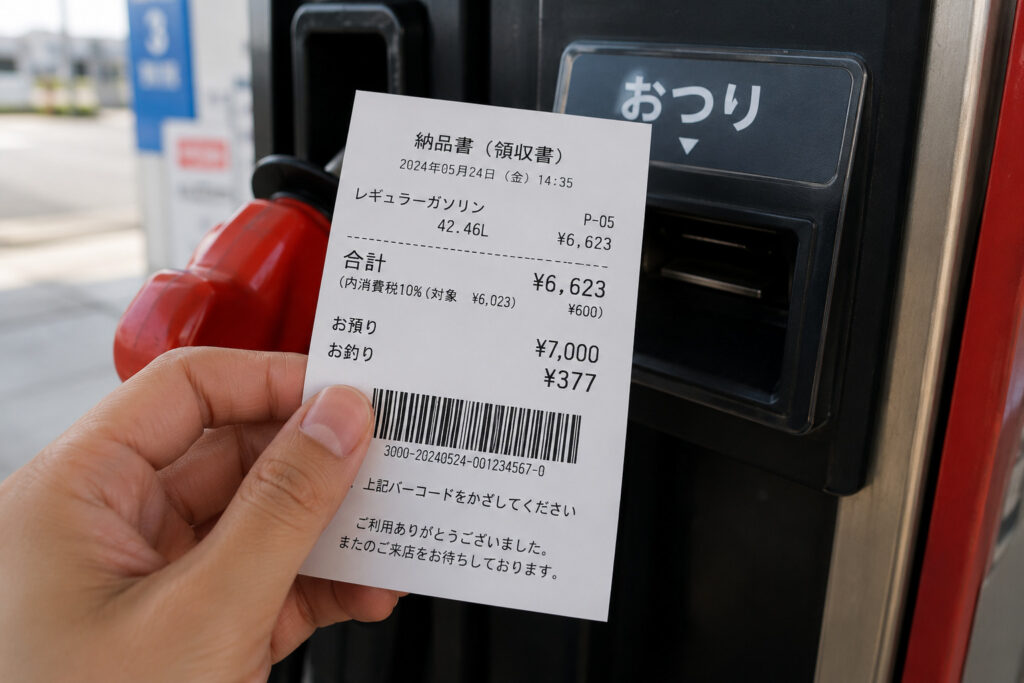
At Japanese self‑service stations, the fuel pump does NOT give change.
Steps:
- Put cash into the pump
- A receipt with a barcode comes out
- Go to the Change Machine near the pumps or cashier area
- Scan the barcode and take your change
Quiet Warning: Don’t drive away just yet! Your change is in a separate machine. It is usually near the pumps or the cashier area.
8. What to do if payment does not work
8.1 If your card fails
- Go to a full‑service station
- Try another station
- Use cash
8.2 If it happens late at night
- Cash is the safest
- Look for a 24‑hour station
You can also read: How to Find Gas Stations in Okinawa
8.3 Quiet Okinawa Recommended Setup
(WordPress の「吹き出し」「ボックス」などで囲むと最適)
✔ One physical Visa or Mastercard ✔ 3,000–5,000 yen in cash ✔ Mobile payment (if available)
With these three, you will not have trouble at almost any gas station.
9. Final message from Quiet Okinawa
- Credit cards work at most stations
- Cash is helpful but only a little is needed
- Foreign cards may not work at certain stations
- Temporary Hold is normal
- Contactless payment is not perfect
- PIN may be required
- Full‑service stations can always help
- A quiet trip comes from simple preparation
Quiet Okinawa’s final advice:
Carry one Visa or Mastercard and a little cash.
With that simple preparation, most travelers can refuel in Okinawa without any problems.
If you are still unsure, full‑service stations are always a good option.
A calm trip is more important than doing everything yourself.
Related Articles
👉 How to Refuel a Rental Car in Okinawa
A step-by-step guide for using self-service gas stations in Okinawa.
👉 Gas Stations in Okinawa at Night and Early Morning
Important tips for unmanned stations and early-morning travel.
👉 Rental Car Return Checklist in Okinawa
Avoid last-minute stress before returning your rental car.
👉 Do Gas Stations in Okinawa Use English?
Simple phrases and tips if you need help at a gas station.
👉 Which Side Is the Fuel Door?
A simple 5-second check before entering a gas station.
コメント