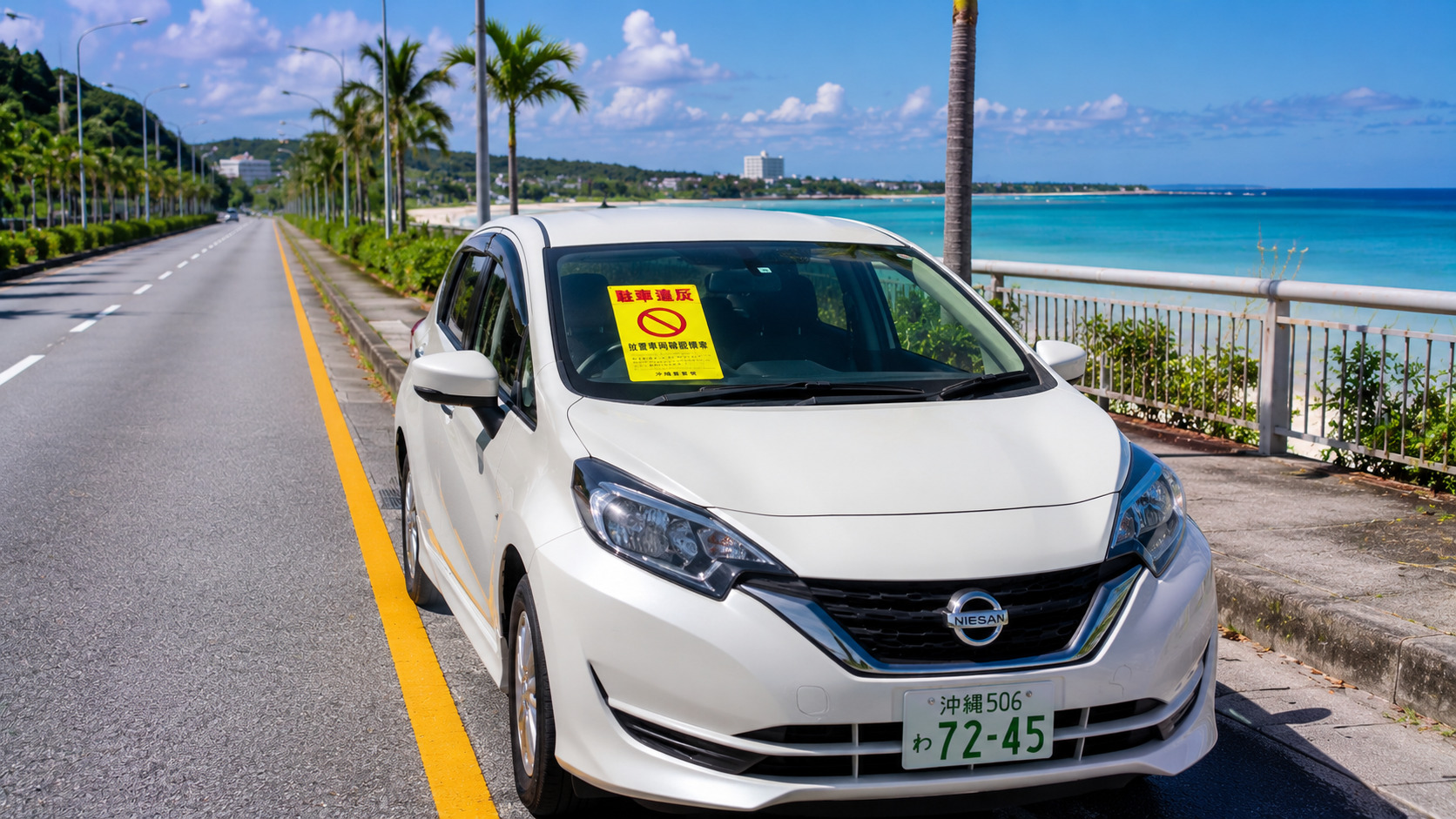
Many visitors ask: “Can I stop my car here for a short time?”
This guide explains the rules in simple English. It is for first‑time travelers and non‑native speakers.
- 0. Conclusion: Travelers Should Avoid Street Parking
- 1. Where Can You Park?
- 2. Why Street Parking Is Difficult
- 3. “Can I Stop for Just 5 Minutes?”
- 4. Common Misunderstandings
- 5. Places That Are Especially Risky
- 6. How to Read Parking Signs
- 7. Important Notes for Rental Cars
- 8. Local Tips
- 9. Busy Parking Times
- 10. What to Do If You Cannot Find Parking
- 11. Summary
- Related Articles
0. Conclusion: Travelers Should Avoid Street Parking
Travelers should avoid street parking in Okinawa because it often causes trouble. It can lead to fines and extra charges from the rental car company.
1. Where Can You Park?
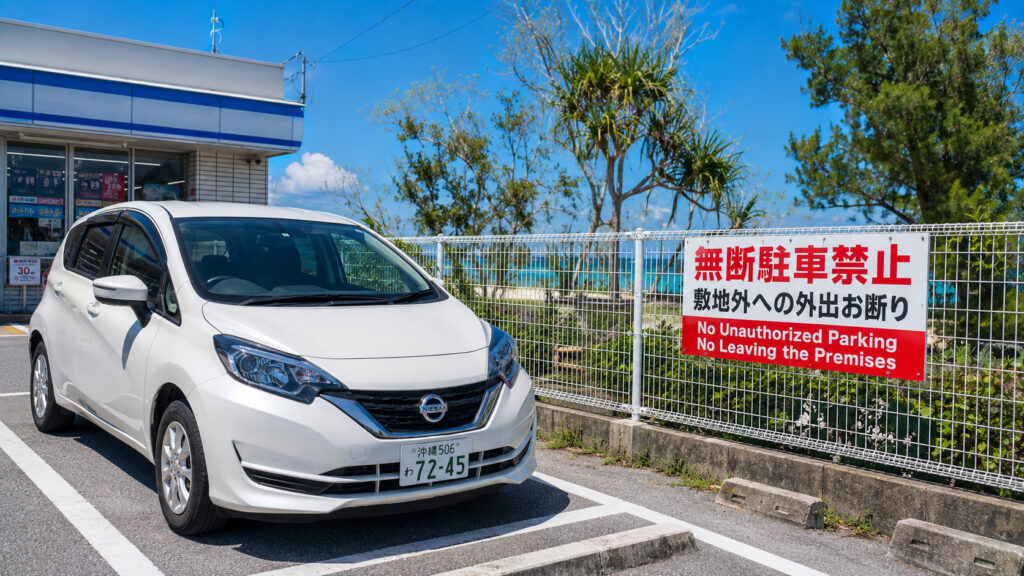
Official Parking Areas
- Parking lots at beaches and tourist spots
- Roadside stations (Michi‑no‑Eki)
- Parking at museums and attractions
- Paid parking near beaches
- Coin parking in Naha and Chatan
Convenience Stores
- You can park only while actively shopping inside.
- Long stays are not allowed.
- Never leave your car to visit nearby beaches or cafes.
- Many stores have “No Parking” signs.
Important Note
Google Maps does not show all parking lots, so do not rely on the map alone.
Even if you do not see a “P” on the map, check for signs when you arrive.
Busy Hours
Northern Okinawa gets crowded from 10:00 to 14:00. Arrive early to avoid parking stress.
2. Why Street Parking Is Difficult
- Roads are narrow
- Traffic is heavy
- Police check violations
- Rental cars are easily identified by specific characters (“わ” or “れ”) on their license plates
- Local people use small roads daily
- Roads are dark at night, so parked cars are hard to see
3. “Can I Stop for Just 5 Minutes?”
Conclusion
Avoid street parking even for 5 minutes.
Leaving your hazard lights on or staying inside the car does not make it legal. Even a short stop can block narrow roads.
4. Common Misunderstandings
- “Hazard lights make it OK” → No
- “Other cars are parked, so it’s OK” → No
- “Nighttime is safe” → No
- “No white line means OK” → No
- “Open space near the beach is a parking lot” → Usually private land
- “Staying inside the car makes it OK” → No
5. Places That Are Especially Risky
- Narrow roads near beaches
- Village roads
- Curves and slopes
- Dark roads at night
- Road shoulders near tourist spots
6. How to Read Parking Signs
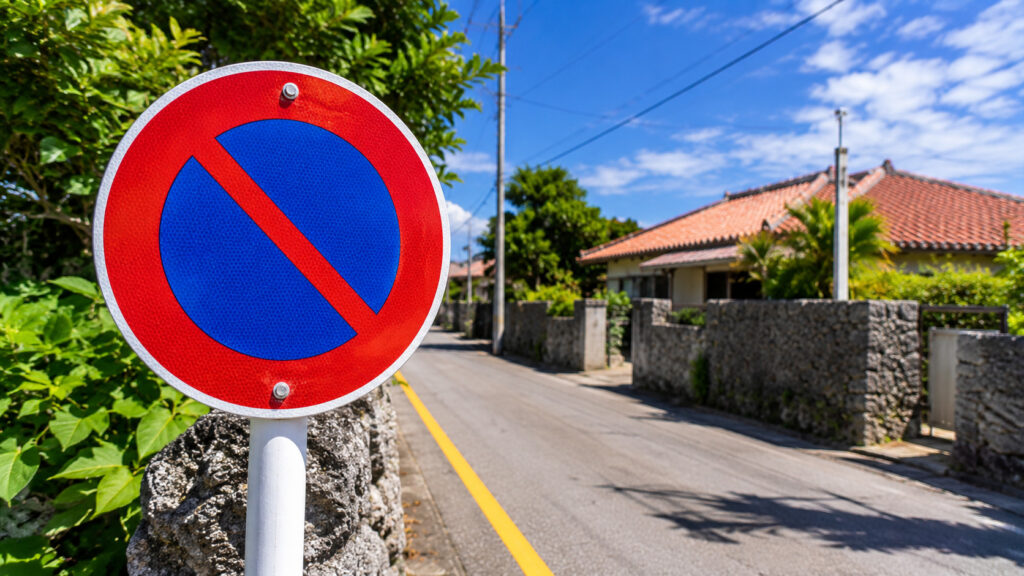
- Yellow solid line → No stopping or parking
- Yellow broken line → No parking
- Blue circle with a red slash or red X (sometimes with a “P” inside) → No parking
- Square signs with Japanese text like “駐車禁止” → No parking
- “関係者以外立入禁止” → Private property
7. Important Notes for Rental Cars
If you get a parking violation:
- A yellow sticker will be placed on your car.
- You must complete parking violation procedures and pay a penalty.
- If you return the car without doing this, the rental company will charge a heavy penalty fee (often tens of thousands of yen) directly from your credit card.
To avoid trouble, use official parking areas from the start.
8. Local Tips
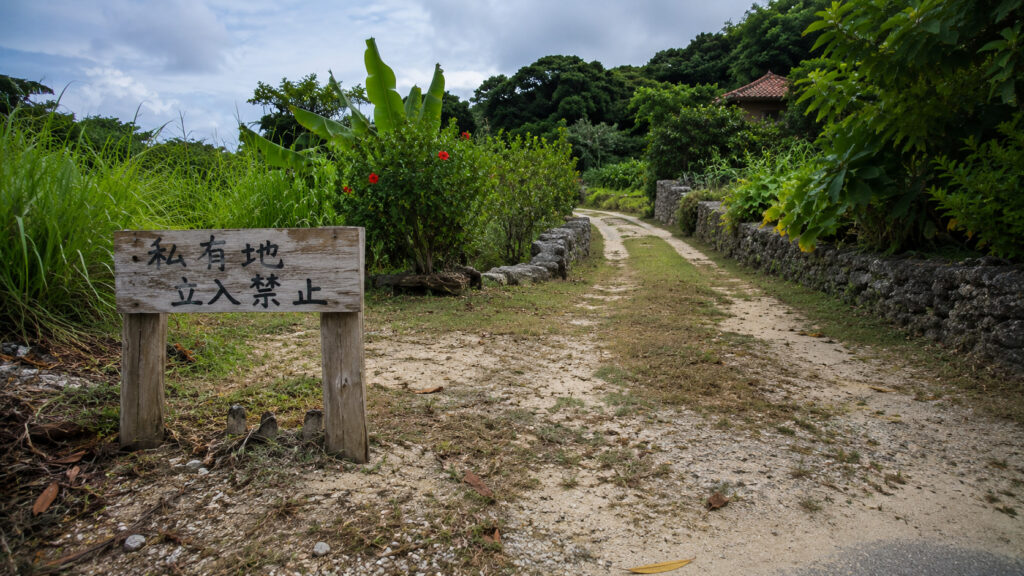
- No white line does not mean parking is allowed.
- Grass, sand, and empty land are usually private property.
- Okinawa has many farm roads and village roads.
- These roads may look wide, but locals use them for daily life.
- Some farm roads appear as normal roads on Google Maps, but they are not for parking.
- A place may look like a parking lot, but always check the signs.
- Many beach areas do not have parking directly in front of the beach.
- Google Maps is not perfect for parking.
- White lines are hard to see on rainy days.
Extra Tip
Trying to park very close to your destination may lead you into narrow or private roads.
Walking a short distance is often safer.
9. Busy Parking Times
Parking lots in the north get crowded around noon.
- Near Okinawa Churaumi Aquarium
- Kouri Island
- Bise area
Arriving early helps you avoid long waits.
10. What to Do If You Cannot Find Parking
- Do not stop on the road
- Move to a safe place first, like a convenience store or roadside station
- Search for parking areas on Google Maps, but also check local signs
- Check the area on foot
- Ask a local person if you are unsure
11. Summary
- Travelers should avoid street parking in Okinawa
- Use official parking areas
- Avoid private land and unmarked spaces
- Arrive early during busy hours
- If unsure, move to a safe place and check again

コメント